Archives!


“ As the primitive character of our relationship with God moves on to more mature levels, we may still get lost from time to time, in the details of life, or as one poet put it. The dust of the world.”
Thomas Keating”

 Thomas Keating’s Experiment extracts from an article written in 1993
 
Continuation from the last Newsletter of the article written by Thomas Keating on 6/6/ 1993.
 

“The term, “meditation” means for people exposed to Eastern methods what we Christian mean by contemplation, that is, a way of disregarding the usual flow of thoughts for a certain period of time. From a physiological/psychological point of view, which is really the essence of any form of Eastern meditation. As Carlos Castenada put it in a classic phrase, “Stop the interior dialogue.” That is the principal discipline in contemplative prayer. The process of committing oneself to the Divine guidance is not a “hands -on” feeling quite the contrary, it is the courage to proceed without any divine “hands-on, that is, into the dark nights where the real journey takes place, and without  which one does not normally reach the Promised Land.
 
Our organisation is definitely not a form of lay monastic life. I deliberately rejected that paradigm because I knew as soon as we used the term “monastic,” the average citizen would be back in the institutionalized view of contemplation which is for cloistered people only. Even more secular priests have the same concept. I remember a priest saying that in the seminary he attended, when the professor of spirituality came to the place where the text referred to contemplation, he said, “We won’t go into that stuff here. That is for the boys up in “*Spencer”

As if contemplation had nothing to do with persons in active ministry. That was the mindset that we were dealing with until 1975. One could not talk about contemplation even to cloistered people without some getting up and leaving or with most becoming very nervous. The rank and file were taught that this is only for mystics and saints. In actual fact, contemplation is not the reward of virtuous life; it is a necessity for a virtuous life. We will be waiting a long time for the priests and for the lay people who are now assuming many of the duties of priests, to be capable of spiritual guidance. They have to be touched or enlightened by the fact that we do not make ourselves spiritual directors but commit, submit, and surrender ourselves to the journey without the props that we would like to have to feel secure. In fact, the letting go of security is something we have to agree to. Without having accepted the trip into the unknown, one is really not a candidate for contemplation because that is what is presupposed: to let God lead us into a place that involves a complete reversal of our prepacked values, a complete undoing of all our plans, and a lot of  letting go of our preconceived ideas.

That raises the problem of what is self? What “self” are we talking about? This has given rise to the background material on the false self and the true self, which is basically the same ideas as the term “old man” and the “new man” in St. Paul.
 
Motivation is everything in the spiritual journey. God, I think, cares less about a change of lifestyle, monasteries, deserts, or perfect circumstances, than about our attitude towards what we are doing. As we know, our motivation can be inspired by the false self-system dressed up in religious or spiritual garb.
This letting going to the unknown, or other images for submitting to the unloading process, such as the idea of the divine therapy, is an essential step into the mystery of our own unconscious. Hidden there is not only our whole life’s history, especially the emotional wounds of early childhood buried in the warehouse of our bodies, but also the positive elements of our potential for growth in faith, hope, and love, and where the greatest repression of all, namely the Divine Indwelling, is also present.

We must gradually recover the conviction, not just the feeling, of the Divine Indwelling, the realization that God: Father, Son and Spirit, is living in us and that we are incorporated into the Trinitarian life and love, this is the heart of the spiritual journey and in service of which Centering Prayer is a renewal, a  way of making available the traditional teaching of the centuries in a form that is accessible to people today. This cannot be done, it seems to me, without some psychological relating since that knowledge is such a prominent part of Western culture.

The question arises “Is Centering Prayer a part of Lectio Divina?” It is not. It is related to Lectio Divina very closely but not so much to the method as to the developing relationship with Christ that Lectio Divina involves. It is emerging out of the same tradition. My experience in the monastery where Lectio Divina is the chief discipline of prayer, is that for years people would be reading scripture and other spiritual books with a certain prayerful intention, but they did not  know how to do Lectio in a way to foster its purpose as a relationship.
The primary purpose of the Centering Prayer practice is to rescue Lectio Divina from its failure in our time because people are enculturated to oppose its spontaneous movement toward contemplative prayer. There is little instruction in how to read a spiritual book and the obstacles to it be increasing with the information explosion. I observe this often in monks and nuns and other people. Some people have a bright mind and are intellectually geared to endless reflection.

This is not to say that some reflection on the truths of faith is not necessary. The great problem with Lectio in our time, is how do you get from simplified affective prayer to contemplation? I do not see many monks and nuns making that passage through the practice of Lectio. That is why I could see that Centering Prayer, or some such practice was essential even to do Lectio in the right way. In our time there is a predominant enculturation, especially in theological circles, in the two things that are most inimical to proceeding from discursive meditation to interior silence, and these are hyperactivity – thinking that we have to do something in prayer to please God. People think if their minds are empty of reflections or particular acts that they are doing nothing or dozing. The other problem is the tendency to over-conceptualize, a special hazard for those who are highly educated and more so, for those who are highly trained theologically.

They have gradually absorbed the idea that thinking about God is praying. It is not. Centering Prayer is a way of enabling people of our time to get over those two major cultural obstacles to their development in prayer. In Lectio we have reading, reflecting, and responding, and then in some mysterious fashion, resting in God. I did not see many monks and nuns doing the latter. For centuries in Jesuit communities for fear of false mysticism, one had to stick to discursive meditation. There is no common teaching in our time, as to how one moves from discursive meditation to resting in God. The historical results of this mentality is not surprising: contemplation became institutionalized and hence available only in certain highly structured circumstances, which were not remotely accessible to lay persons or even to those in the act ministry, not to mention busy monks and nuns in cloisters.  Without the experience of resting in God, all the capital sins can flourish without one actually being aware of the fact. One may think one is doing great things for God if one gets into parochial work or teaching, but the seven capital sins, the result of the emotional programs for happiness, are there in concrete form.
 
Centering Prayer is a distinct method of prayer. It is not Lectio in any sense of the term. But it is designed to rescue Lectio from stagnation and from its tendency to get stuck in interior ego
trips of one kind or another. At some point, people once they have thought over the truths of faith adequately, will not be satisfied with continuing to ruminate forever.
 
This is the reason why I say one cannot do the spiritual life nowadays without some knowledge of psychology. This is not to say that psychology will get you there. It will not. It will only clear the stage and enable one to get some degree of egoic self-identity, which still implies the false self in some degree. But without developing the ego or self-identity, the psychological resources for the journey are lacking. ….
 
Without  personal responsibility for our emotional life, however bad it is, the journey is not not going to be comprehensive or adequate. It is not our conscious life that is the biggest problem; it is the unconscious motivation that has to be changed.
 
Centering Prayer creates the atmosphere in which that change can begin to take place.
To be continued
 
 *Spencer referes to the Cistercian Monastery in Massettusets, USA
MONDAY AFTERNOON Weekly.
Every Monday at 3pm. Twenty minutes of Centering Prayer followed by a time for sharing and discussion. Normally finishes by 3:40pm. To participate send an email to: 
Hugh Reid at hugh_reid2@yahoo.co.uk
 
 
WEDNESDAY MORNING fortnightly
Wednesday Meeting
Fortnightly on Wednesdays at 11 am. Twenty minutes of Centering Prayer then space to share for those who wish until 11:45 am. 
Contact Elaine at: elainewatson387@yahoo.co.uk
 
 
WEDNESDAY AFTERNOONS fortnightly
Fortnightly on Wednesdays from 3:30 to 4:30. Twenty minutes Centering Prayer
Followed by a discussion based on a chapter from Thomas Keating’s book, “Open Mind: Open Heart.” To participate send an e-mail to David McCormick at davidfrancistssf@gmail.com
 
 
THURSDAY EVENING
Fortnightly on Thursdays from 7 pm till 8 pm. Twenty minutes of Centering Prayer followed by a discussion based on a chapter from Thomas Keating’s book ‘Open Mind, Open Heart’. To participate send an email to David McCormick at davidfrancistssf@gmail.com

A new page on the website contemplativeoutreachuk.com called “Calendar” will keep you updated on Zoom Groups and Events.

Contemplative Outreach Retreats 2022  
1. A Deeper look at Centering Prayer and its Transformative Action. 
The Franciscan Friars, Alnmouth, near Alnwick, 
Mon.8th  to  Friday 12th August 2022.
Costs:£210. Dep £25 to secure your place. Places going fast! 
 
2. An Intensive Retreat The Monastery of  Our Lady of Hyning.
Carnforth, near Lancaster. 
Friday 4th to Saturday 12 November. 
Costs £440. Dep. £25 to secure a place.
 
Cheques payable to Contemplative Outreach UK and sent to.
10 Hawthorne Ave; Higher Walton; PRESTON; PR5 4EE.
 
or bank transfer to:
HSBC,
Account:84444108
sort code: 40-37-25 Ref: Aln. Retreat.
 
If you are interested in The Formation for Contemplative Service  (formerly known as Presenter Training) please contact infocuk@btinternet.com
Never judge someone by the opinion of others. 
News of Centering Prayer in mainland Europe.

Oslo, Norway: Kirsti is planning an Introductory Day.
Contact: Kirsti.silvola@icloud.com

At the request of Fr Thomas Keating, you can now watch and listen to all his teaching on Centering Prayer for FREE on
YouTube, click 
HERE for the direct link to the playlist.

“The Spiritual Journey with Fr. Thomas Keating”

All Parts

“Afflictive emotions show beyond doubt that the problem is within you.”

Mystery of Christ, Thomas Keating. 
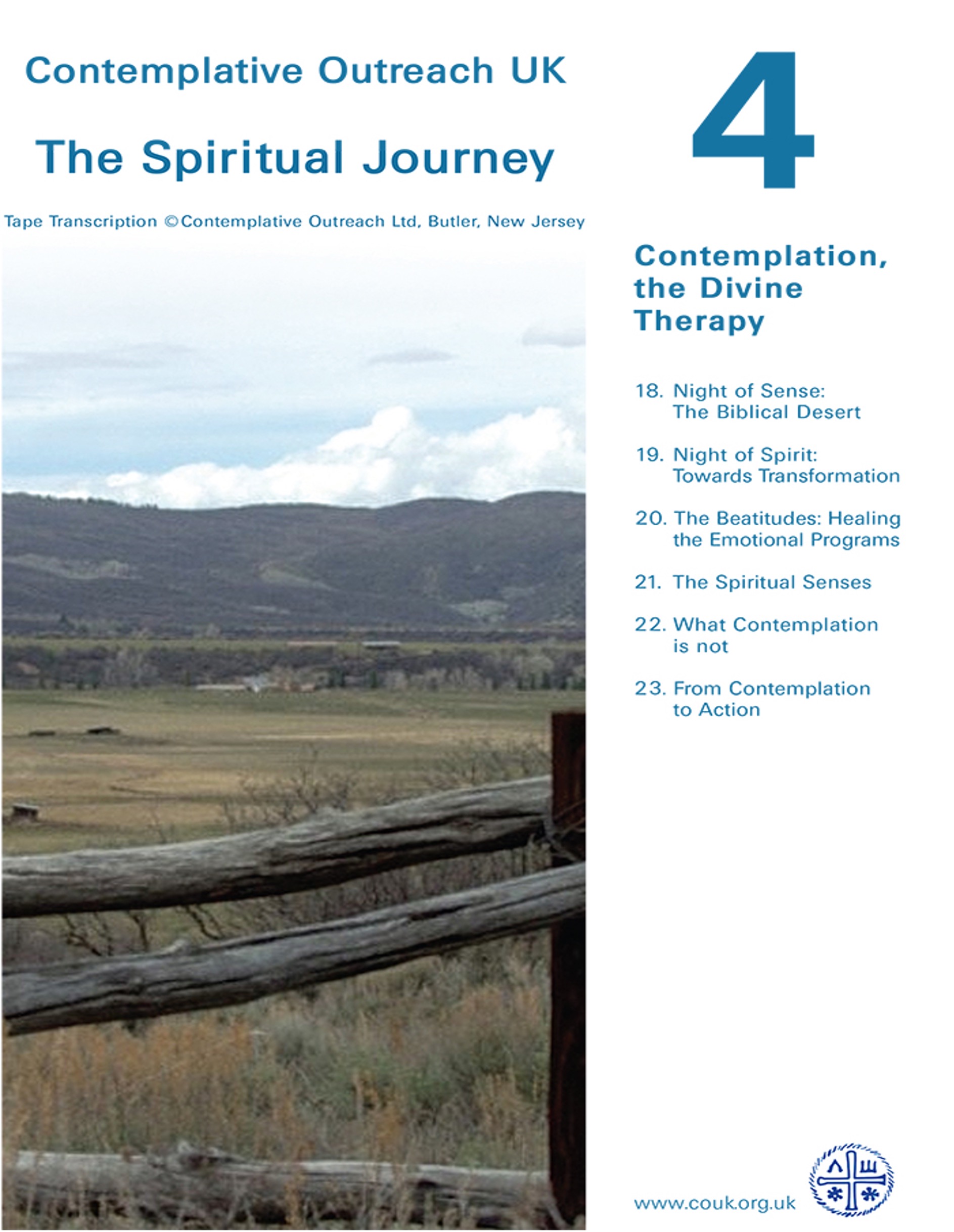
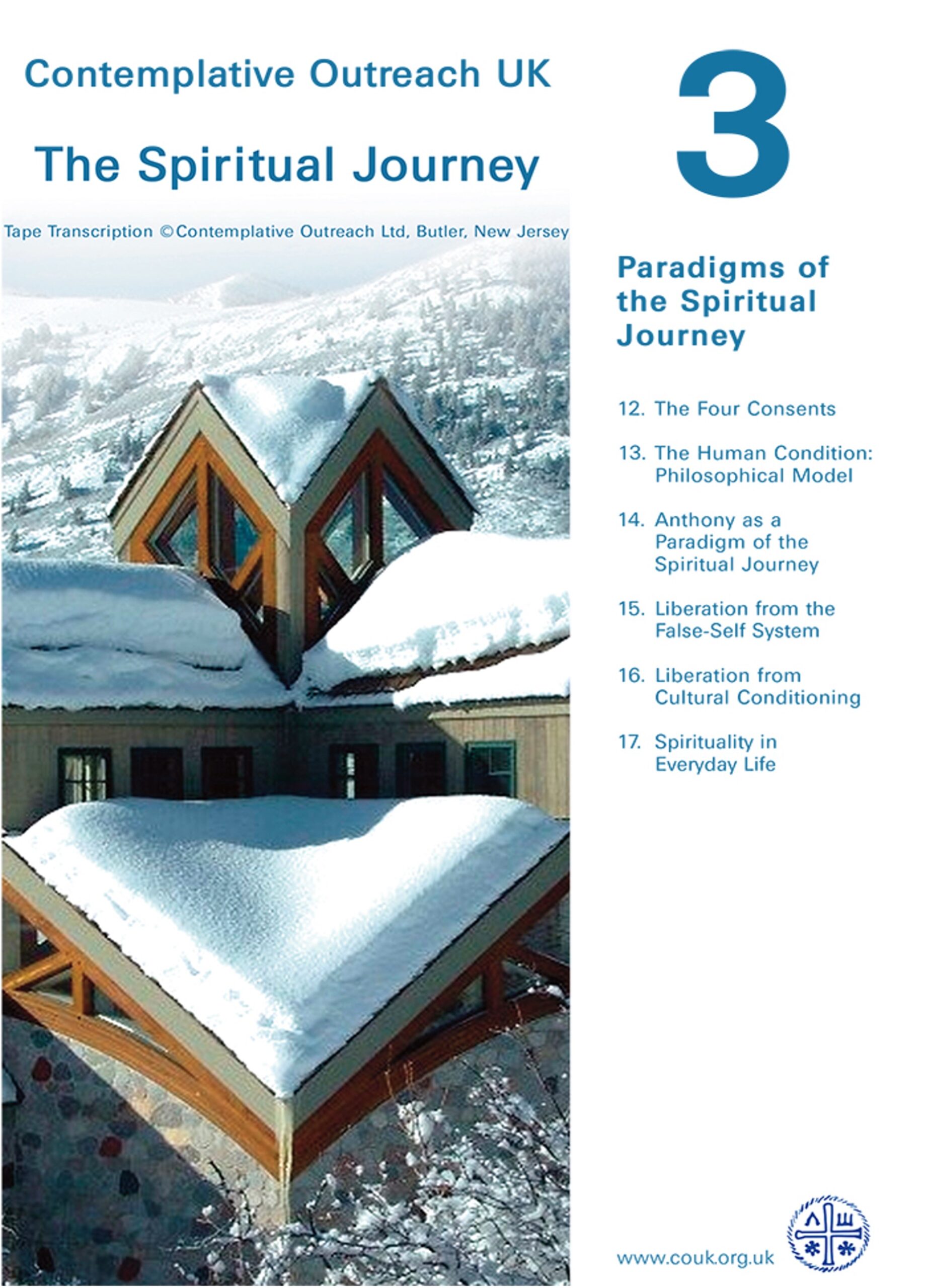
The transcripts contain the spoken words of Fr Thomas Keating from the Spiritual Journey Series in written format.

Each Booklet contains six written sections corresponding to that found on the DVDs, except for Part 5 which only has five sections.

Cheques payable to: Contemplative Outreach UK
Address:
10 Hawthorne Ave,
Higher Walton,
Preston,
PR5 4EE

OR

Pay by Bank Transfer:
Account Number: 84444108
Sort code: 40-37-25         
Ref: Transcript
BOOK SALE TO RAISE FUNDS FOR C.O.UK.

All books are as good as new, some as new. First come first served.
To reserve a book and to check it is still for sale email: infocouk@btinternet.com 

If the book is still available you will receive instructions on how to pay.
The books are only available to those in England, Scotland and Wales due to postal costs.

1. Silence: A User’s Guide. Maggie Ross. £7.00 incl. p+p.
 
2. Developing Consciousness. Nicholas Vesey. £7.00 incl. p+p
A Roadmap to Enlightenment.
 
3. Spiritual Passages. Benedict J. Groeschel. O.F.M. £6.50 incl. p+p
The Psychology of Spiritual Development.
 
4. Bridge across troubled Waters. Kess Frey £10.00 incl. p+p
Centering Prayer and the Theological Divide. (as new)
 
5. Centering Prayer by Basil Pinnington. O.C.S.O. £7.00 incl p+p 
(as new)
 
6. Experiencing God. Thomas Green. S. J. £5.00 incl. p+p
(as new)
 
7. Why not be a Mystic? Frank X Tuoti £9.00 incl. p+p
An irresistible invitation to experience the presence of God. 
(as new)
 
8. Seeking Spirituality – Ronald Rolheiser. £4.00 incl. p+p
(front cover ripped but mended) 
 
Books by Thomas Merton:

9. Seeds of Contemplation £6.00
(as new)

10. In Search of Solitude Journal Vol.3 1952-1960 £12.00
 (as new)

11. Seeds. selected and edited by Robert Inchausti (as new) £7.00
 (as new)

12.The Intimate Merton. His life from his Journals. hardback £14.00
(as new)
 
 PLEASE REMEMBER IN YOUR PRAYERS THE PEOPLE OF UKRAINE. 

Silence, Solitude, Solidarity, Service

Thomas Keating’s Experiment extracts from an article written by Thomas in 1993 

“I envisage Contemplative Outreach as an experiment to see if the fruit of the contemplative experience that I received in the monastery can be made available to people who are leading an ordinary life outside the monastery. It was not with a view to forming a community that we started. Rather we began in the usual way that retreats have been given for centuries.”

“My conviction grew that we could not introduce the contemplative life for people without some kind of on-going formation or support system. Actually, that was the original purpose of the primitive monastic life whether it was conscious or not.”

Observing the great influx of Eastern masters and the great attraction they had for young people in the 60’s and 70’s, a few of us at St. Joseph’s Abbey, Spencer, Massachusetts, USA, who were exposed to their wisdom, started asking ourselves whether it would be possible to put the contemplative monastic tradition into a form that ordinary people could understand and practice. Encouraged by the Vatican Council which urged the Church to try to express theology and Christian doctrine in modern terms and in contemporary language, it seemed to me that something similar should be done for spiritual theology and the contemplative tradition of the Church. It was then that Fr. William Menninger worked on a “how-to” method which was aimed at expressing the richness of the Cloud of Unknowing, by an unknown 14th Century author, in a form that would make it available to people in our day. Without some how-to method of contemplatively oriented prayer, people were being attracted in great numbers to the well thought out and well-presented methods of the Eastern masters who were arriving in increasing numbers in the USA. This was no passing fancy. It is estimated that ten thousand young people went to India every summer in search of spirituality and a guru, none of whom thought of inquiring at a Benedictine or Cistercian monastery about whether they could find a form of spirituality there.

The contemplative tradition was believed to be locked up in cloisters. Even there, it existed in  various truncated forms with an over -emphasis on monastic observances rather than on interior transformation. I felt that it was an acute situation that cried out for some response from the contemplative monks. Although we started off in the early 70’s imaging that it would be of interest to priests in active ministry and religious women, we did not envisage that it would be of much interest to lay people. They had been thoroughly convinced by their Catholic education that any aspiration for contemplative prayer could only be realised in a cloister. Thus, we saw the original movement toward contemplative prayer that had come from lay people looking for a structure that would be most helpful to support their spiritual aspirations, winding up over 

the centuries as the preserve of an institution with the unquestioned assumption that it could not be found anywhere except in a cloister, if indeed it could be found there.

This has left us in our time without a sense of the immense possibility that the Gospel opens out to lay peoples and indeed almost commands them to pursue. Evelyn Underhill is one of the outstanding mystics and writers on mysticism of our era. She offers a parable of the spiritual journey that might be apropos to repeat here. She wrote that the spiritual journey is like the migration of the English swallow, each weighing about an ounce and a quarter, who twice each year take off into the unknown, committing themselves to the air and flying over the ocean where there are no landmarks to give them guidance. And yet without any hesitation, every Fall, thousands of them and in spring return to England undergoing the same hazards. This journey she claims is a good example of what the spiritual journey is all about. We have no idea where we are going. There are all kinds of difficulties that we cannot foresee. The birds commit themselves to the elements by way of blind trust in their inner inspiration. The spiritual journey is basically a surrender to the inner conviction, that what we hope to find in the journey, we either already have or will certainly find. But there is no guarantee that we will get there on the basis of the evidence or our circumstances. We must let go and let the wind (the Holy Spirit )

Take us where we hope to go.

One of the reasons why contemplatives have always been in the minority in this world is because contemplation involves a surrender of one’s whole self, not just a period of time each day devoted to some form of prayer or meditation.   It is a commitment of immense proportions and hence it requires trust of an eminent character, faith that God will bring us where we  hope to go if we submit to this inner conviction or urging that we have to start. It does not matter how many difficulties there are, we have to go. There is no turning back once we have started because the atmosphere is a big place, and we had better stay with the flock. It is a movement of the Spirit rather than a movement of instinct as in the case of the Swallows.”

“ In the early days of teaching Centering Prayer, I perceived that people had to have some kind of adequate support system if they were going to persevere in the practice.”

“Naturally a lot of ordinary lay people stop when they get the message that Centering Prayer is not just a method of prayer that may provide a few months of peace before the real trials and difficulties begin. It requires dedication, hence some people are going to back out. It involves a commitment of the whole person, body, soul and spirit. Centering Prayer is totally in the service of sustaining us in a transformation process which is anything but secure, easy or certain.”

“I turned for a conceptual background to certain psychological paradigms because I think that very few seekers are going to start the spiritual journey today by reading the spiritual classics. I wonder if anyone would have started Centering Prayer f I had not put it into a psychological frame of reference that he or she could identify with. I don’t think the old classics are the way to start unless you are in a monastery where you have easy access to books.”

“The Christian Tradition has always been somewhat limited in methodology.”

“When I resigned from St. Joseph’s Abbey in 1981 and moved to St. Benedict’s Monastery, Snowmass, Colorado, I never intended to teach Centering Prayer. I got back into teaching Centering Prayer by being invited by the local pastor to give a course in something during the month of May 1982. Later an opportunity opened up to give a lengthy Intensive Retreat. I had always wanted to see what would happen to Christians if they meditated five or six hours a day. The retreat was a watershed. That experience convinced me that the same dynamics were available if Christians could be persuaded to do a form of non-conceptual prayer over a period of two weeks.

Anyone who does any kind of serious prayer practice has to have a conceptual background to explain it to themselves if not to other people. I knew that this need would be in great demand rather soon if people kept doing Centering Prayer. I tried to bring the Christian contemplative tradition in dialogue with contemporary science especially developmental psychology, anthropology and physics. I did not expect at first that anyone would be interested in it -certainly not lay persons. But I soon found out that lay persons were much more interested than the average priest or religious. I also became aware that people of other Christian denominations were interested too because they never had a contemplative tradition in their denominations (or at least not one for a very long) and they were beginning to feel the need of something. Many priests and bishops were beginning to question whether the way to reconvert people was to start with the Eucharist or Christian doctrine. Some kind of prayer experience looked a more promising way to begin.”

To be continued in the next Newsletter ……


MONDAY AFTERNOON – Weekly.

Every Monday at 3pm. Twenty minutes of Centering Prayer followed by a time for sharing and discussion. Normally finishes by 3:40pm. To participate send an email to Hugh Reid at hugh_reid2@yahoo.co.uk.


WEDNESDAY MORNING – fortnightly.

Wednesday Meeting
Fortnightly on Wednesdays at 11 am. Twenty minutes of Centering Prayer then space to share for those who wish until 11:45 am. Contact Elaine at elainewatson387@yahoo.co.uk.


WEDNESDAY AFTERNOONS – fortnightly.

Fortnightly on Wednesdays from 3:30 to 4:30. Twenty minutes Centering Prayer.
Followed by a discussion based on a chapter from Thomas Keating’s book, “Open Mind: Open Heart”.
To participate send an e-mail to David McCormick at davidfrancistssf@gmail.com.

THURSDAY AFTERNOON – fortnightly.

Fortnightly on Thursdays at 2pm. Twenty minutes of Centering Prayer. After the time of silence one of the ‘Guidelines for Christian Life, Growth, and Transformation’ from Thomas Keating’s book ‘Open Mind, Open Heart’ is read out. Participants then discuss the guideline. The meeting finishes at 3pm. 
To participate send an email to Sandra Ford at: sandra.ford32@gmail.com

THURSDAY EVENING – fortnightly.

Fortnightly on Thursdays from 7 pm till 8 pm. Twenty minutes of Centering Prayer followed by a discussion based on a chapter from Thomas Keating’s book ‘Open Mind, Open Heart’.
To participate send an email to David McCormick at davidfrancistssf@gmail.com.

A new Calendar page on the website will keep you updated on Zoom Groups and Events.

Contemplative Outreach Retreats. Due to the Pandemic, it is difficult to organise residential  retreats. 

The Formation for Contemplative Service has been successfully completed via Zoom. If you are interested contact infocouk@btinternet.com

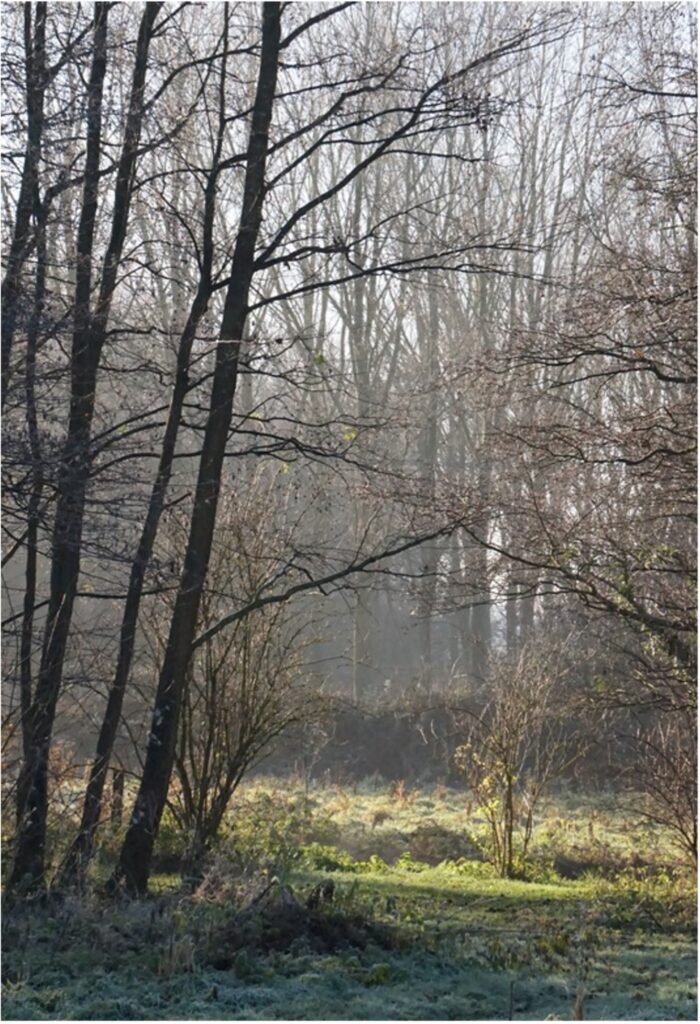
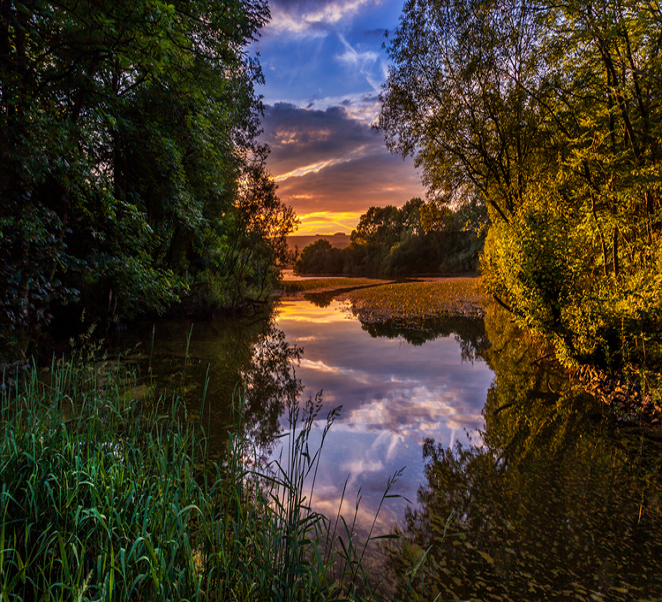
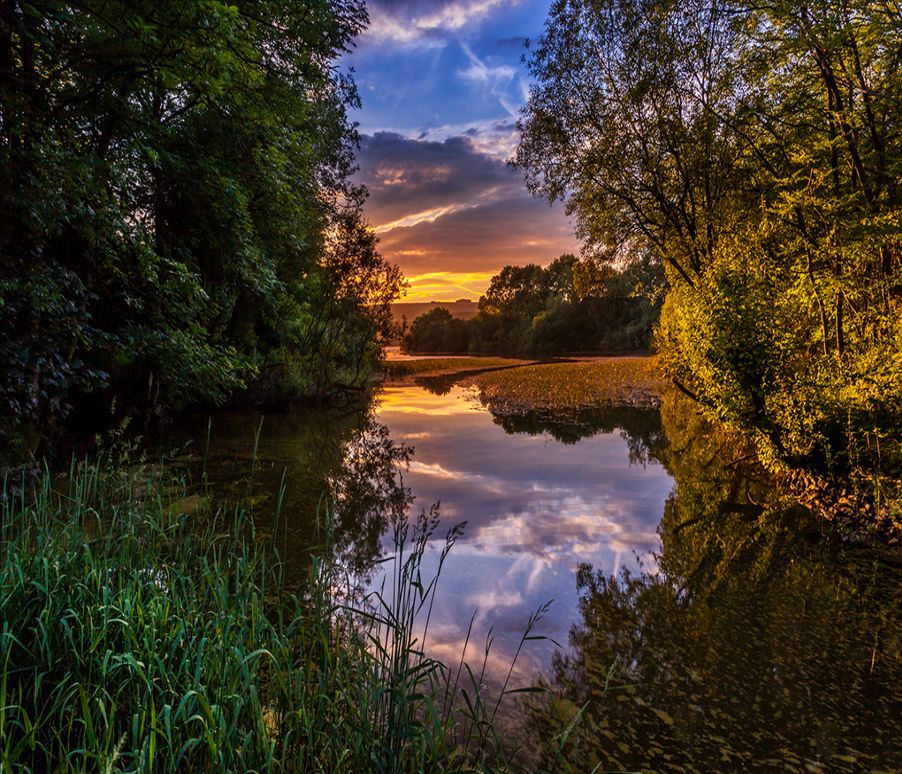
Dawn

A gift,
An empty space
To retreat, 
To rethink, respond,
To recall, understand.

Stand still and listen,
The wind,
The voice of the trees, 
Words of love
You should have spoken,
Pathways still to follow.

Stand still and listen again,
To the silence
You have yet to hear,

The song,
The blackbird,
The dawn.

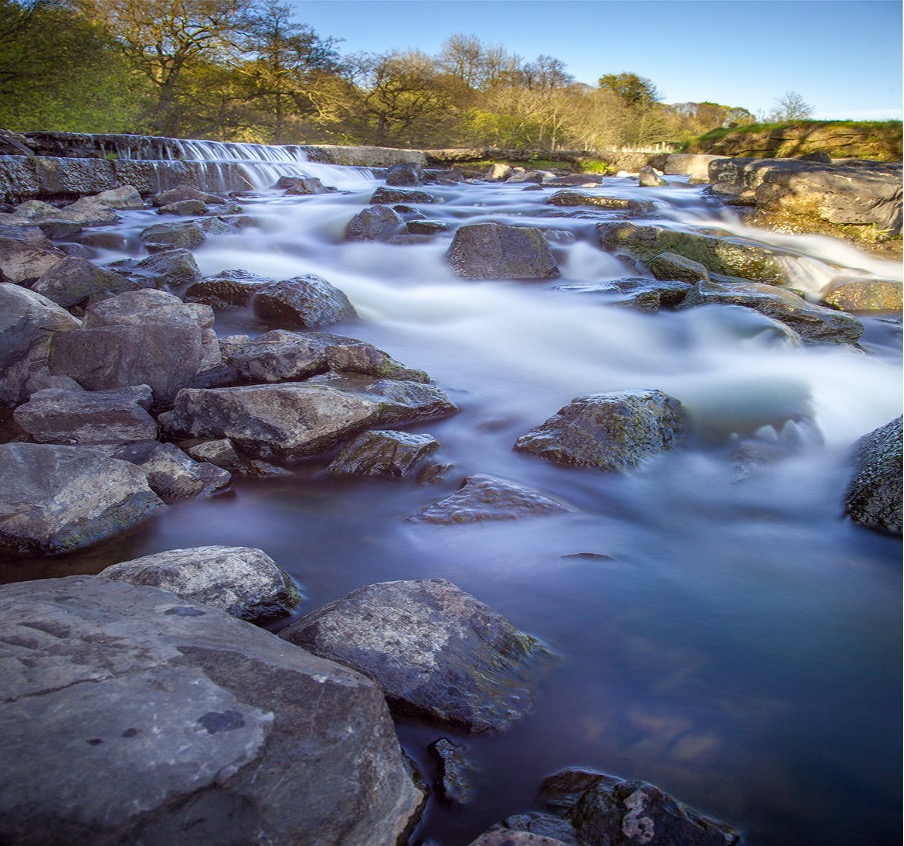
Poem and picture by Chris Roe.

“I am not bound by thought or sense or shape:
I live in the glory of the Infinite.
I am near to the Nameless and the Unknowable,
The ineffable is now my household mate.”

Savitri


Irene’s Updates.

The Spiritual Journey – Formation in the Christian Contemplative Life.
This e-course which was available from Contemplative Outreach Ltd on
the Spirituality and Practice website, is now being offered for free on the CO website.

News of Centering Prayer in mainland Europe.

On Sunday 7th November it was a great pleasure to talk with Kirsti, Sirkku and Kristel via Zoom. Like all of us the Pandemic has affected what they have been able to do. Estonia has been particularly hit hard by the pandemic. Sirkku and Kirsti have done a  two week retreat together. Kirsti is talking with someone from a silent prayer group in a day or two. Sirkku is planning a two-year training course.

To remind you,

  • Kirsti lives in Oslo, Norway 
  • Sirkku lives in Tuusula, Finland and will be introducing Centering Prayer in her area. Sirkku also will be translating the teaching into Finnish.
  • Kristel Ehala-Aleksejev lives in Tallinn, Estonia and will be introducing Centering Prayer in her area. Kristel with the help of Sirkku will be translating the teaching into Estonia.

We will have another Zoom Meeting in six months. 

If you have news of any other groups in mainland Europe, please email infocouk@btinternet.com with the information. Thank you.

The transcript is sold by Contemplative Outreach UK.
£12.50 incl. p + p.  UK. only.

You can also email for more information – infocouk@contemplative-outreach-ukThey are also available from – Elizabeth Smith,10 Hawthorne Ave, Higher Walton. PRESTON, PR5 4EE
We have more on our website click HERE to go to our site.

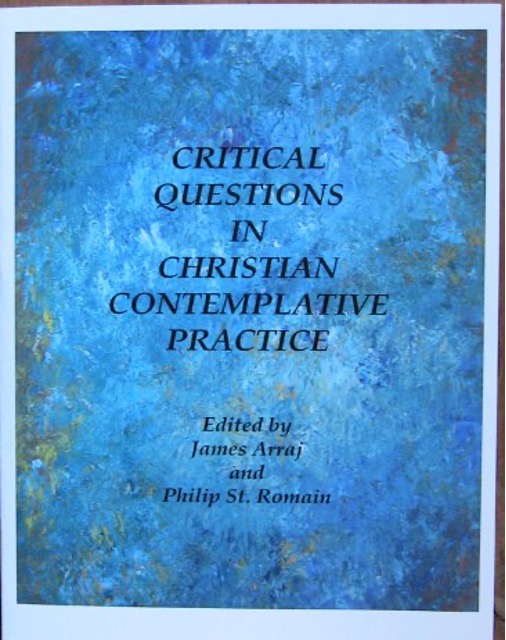
Both Philip and James are married with children and live in the USA
James Arraj is a Jungian psychologist. He has written a number of books on psychology and spirituality. 
Philip St Romain is an author, spiritual director, and retreat leader.
 
Kindle edition £5:20
Part 1 introduces us to three modern attempts to renew the Christian life of prayer.
 
Part 2 allows us to meet people today who have had Christian experiences of prayer and contemplation.
 
Part 3 explores how the renewal of the Christian contemplative life is interacting with Eastern forms of meditation.
 
The wide-ranging debates found here are the result of the Christian mystical tradition trying to wake up and throw off the torpor of a sleep that has lasted more than 300 years. And the most amazing thing about these discussions is that they are taking place in a new context which is not a theoretical theological analysis of the spiritual life, but among people who are concerned with how one would go about living the contemplative life day by day, and who are actually trying to do it. In short, we face the first sustained practical interest in contemplation since the end of the 17th century, but already this enthusiasm has raised critical questions that need to be addressed lest these new beginnings go astray.

The material here came originally from www.shalomplace.com and www.innerexplorations.com

Transformation

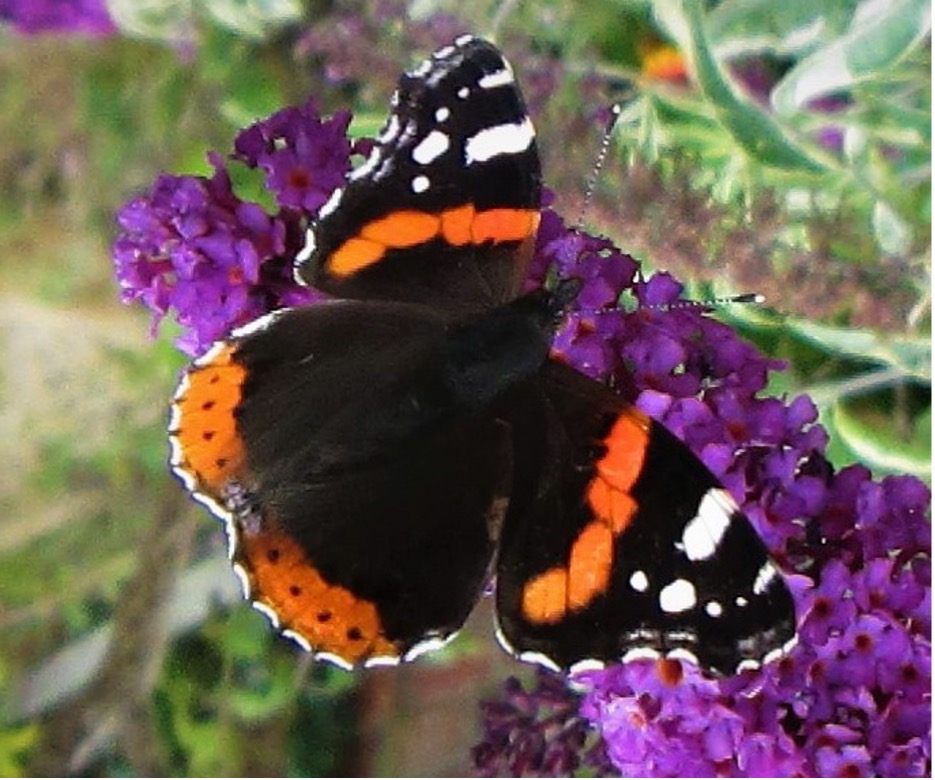
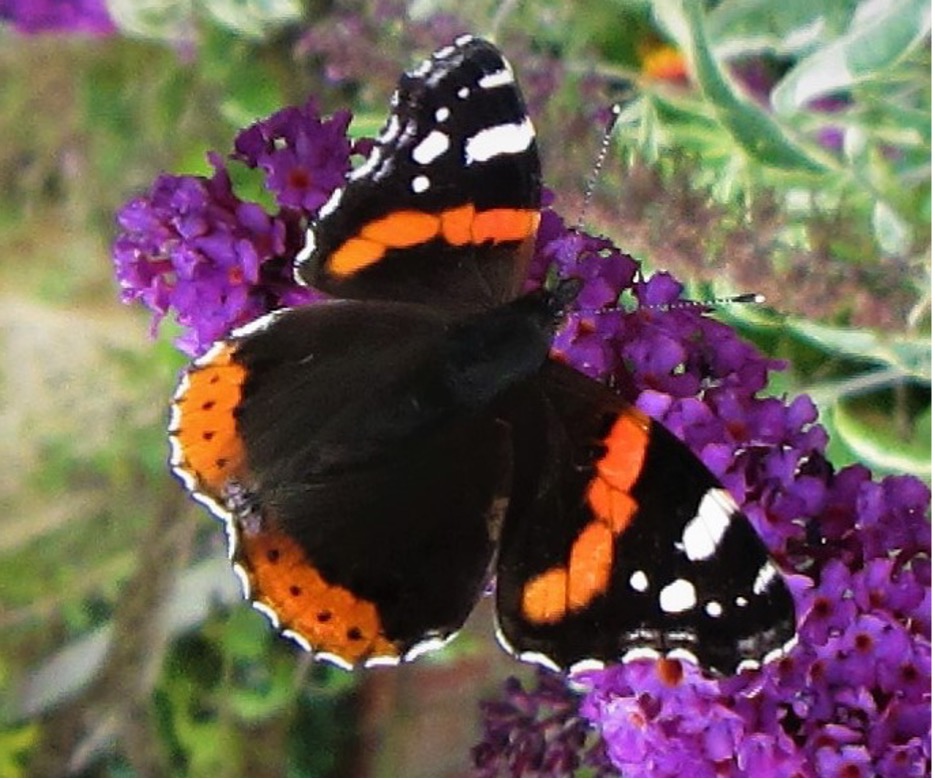
The butterfly has long been a symbol of transformation.
What begins as a caterpillar emerges from the cocoon
and spreads wings of rainbow brilliance.
We too can make changes in life that take us to
Greater heights than we ever dreamed possible.

We have made a prison for ourselves by building the walls of defence, the False Self. We are not free. The Warden of this prison is us. We can set ourselves free by dismantling the False Self. 

Comments on The False Self Teaching Weekend held via Zoom.
Saturday 1st May to Sunday 2nd May 2021.

The False Self’. I enjoyed it immensely.

I drank in spiritually the entire weekend. I have been on one of the Contemplative Outreach UK retreats at Buckfast Abbey a few years ago but had let the plethora of religious inputs available distract me, and had not looked after myself, mainly from my co-dependency, as I saw it, but which I now can readily understand in terms of the over-investment in seeking power, esteem, and security from or over others – incessantly!!!  I have not looked after my own crying spiritual needs, and had stopped practising Centering Prayer, and the other tools I had learned on my retreat. This weekend was therefore exactly what I needed.

What I gained from it was: delight in praying with the group, joy at having Centering Prayer back in my life, relief at being told that my emotional make-up was laid down by age 3 or 4, so emphatically not my fault, and especially a page of notes on “where do we go from here” to take away with me, made during the last summary talk.

I noted the comments on spiritual gluttony, and on taking one practice and sticking with it. In another setting, I have been told something which pertains: “It is better to dig one ten-foot hole than ten one-foot holes”. The practices outlined which I intend to utilize are, firstly, beginning each day with unconditionally loving all the people in my life – and I note you said that does NOT mean I have to interact with them – but that, if I do, I will have a better chance of a good attitude. 

Secondly, and I have memorized it and am using it several times a day, the ‘Welcome Prayer’, which you had also mentioned at my original residential retreat. I have been told in another setting to ‘detach with love’ and to ‘let go and let God’, that ‘acceptance is the answer to all my problems’, etc. But nobody before has told me just HOW to go about these worthy goals. 

I am finding the Welcome Prayer to be exactly right for that, with its caution not to have aversions nor attachments, and the simple prayers which help me feel more on beam. Even when I begin, by sinking into my current experience, and repeating ‘Welcome’ several times, with a little smile, I feel in touch with God before I even finish.

I am grateful too for the reading list, and I shall buy them, but I shall focus on my copy of ‘Open Mind Open Heart’ first, to keep things simple. I am only too aware of my tendency to over-involve, as you said, with my given peer group, and to try to achieve a prize… esteem and power de la crème… and the spiritual gluttony again. Which my previous Spiritual Director warned me leads to spiritual indigestion.

That is my take-home from your weekend. As you can see, it impacted on me deeply. I will resume my practice of Centering Prayer and contact another lady in my county who used to run a group: might still do, for all I know. It would be good to pray at their time, with them, at home, as she originally invited me to do.

With grateful thanks, and every blessing, Kathie Salter.

At the beginning of May, we were privileged to attend a teaching weekend on The False Self, led by Elizabeth Smith.  Each talk was preceded by a period of Centering Prayer.  For some of us embarking on Book 2 of The Spiritual Journey, it was a revelatory and challenging experience. It outlined the ways in which our emotional programmes for happiness, formed in early childhood, become fossilized into energy centres, and come to motivate us at every level of our human functioning. The weekend ended with a review of practices to counteract and dismantle that false self which denies our true self made in the image of God. Thank you, Elizabeth.

Halina Good (Ushaw Prayer Group)

Irene’s Updates. Practices for Dismantling the False Self.

  • WELCOMING PRAYER

contemplativeoutreach.org Click on Practice. Welcoming Prayer.

contemplativeoutreach.org Welcoming Prayer-Consent on the Go a 40-day Praxis Booklet.

spiritualityandpractice.com : Embracing Living the Welcoming Prayer 2020 updated version e-course

  • ACTIVE PRAYER SENTENCE

contemplativeoutreach.org Active Prayer Sentence

contemplativeoutreach.org The Contemplative Life Program 40 Day Praxis Booklet Open Mind Open Heart Father Thomas Keating Pages 171,172, Anniversary edition. Pages 133-135 Older Editions.

  • GUARD OF THE HEART

Open Mind Open Heart Father Thomas Keating new edition printed 2006, Pages 169,170.“Prayer is not asking. Prayer is putting oneself in the hands of God, at His disposition, and listening to his voice in the depth of our hearts.” Mother Teresa of Calcutta

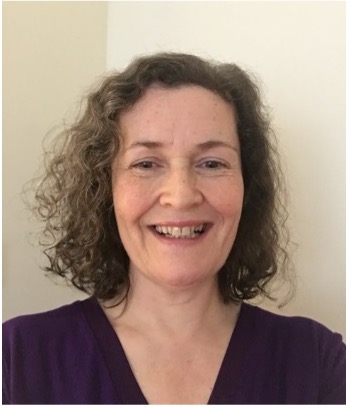
Elizabeth is the founder of Contemplative Outreach UK and is Chair of the Committee. She first met Thomas Keating in 1988, and in 1989 began training in the USA, overseen by Thomas Keating, to present the work of Contemplative Outreach. Elizabeth was on the Faculty for a time and various committees. Thomas Keating was her contact person in the USA and became her mentor and friend until his death in 2018. With her co-author, Joseph Chalmers, Elizabeth wrote the book “A Deeper Love”, An Introduction to Centering Prayer, Thomas Keating writing the preface for the book. She facilitates retreats and leads training workshops. She is an official mentor for the Introductory Day and the Lectio Divina Workshop.

Elizabeth studied Theology and Scripture at Christ College, Liverpool and later studied Christian Spirituality on a Correspondence Course from Ealing Abbey. Elizabeth is married and is a mother and grandmother.


Sandra Ford is a Commissioned Presenter of Centering Prayer and facilitates a small group. Sandra started practising Centering Prayer in 2014 after reading ‘Invitation to Love’ by Thomas Keating. She joined a 5-day retreat led by Elizabeth Smith as part of Contemplative Outreach UK the following year. Sandra has found Centering Prayer a gentle practice, which introduced her to contemplative prayer. It has become a practice that her day now revolves around. During the rest of the day, she is a mum, wife, daughter, sister, friend, GP, and dog lover. She lives in Glasgow.

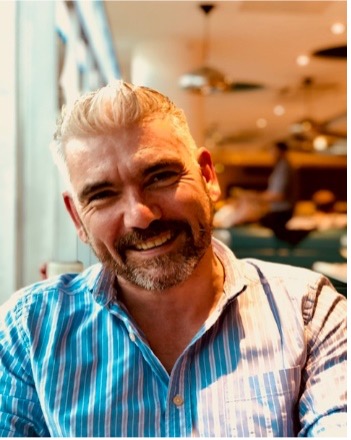
David McCormick is a Commissioned Presenter of Centering Prayer and feels blessed to share this treasure with others. He has been practising Centering Prayer since 2010, after discovering Thomas Keating’s classic book ‘Open Mind, Open Heart.’ An Anglican priest and Franciscan Tertiary, David lives in Lincolnshire and is Rector to a parish after a period of self-supporting ministry as a coach, mentor, and retreat giver. The twin disciplines of Centering Prayer and Lectio Divina have encouraged and enabled him to accept God’s invitation to grow steadily into a space of open heart and mind. 


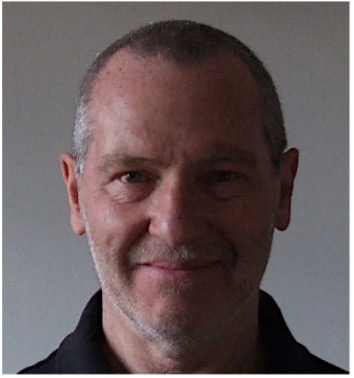
Hugh Reid is a Commissioned Presenter of Centering Prayer. He currently facilitates an online ‘Just Prayer’ meeting every Monday afternoon. Hugh is a retired lecturer of Physics from the University of the West of Scotland. He lives in Dunfermline with his wife and works as a writer of Science Fiction stories. After exploring a form of Eastern meditation, Hugh found his way to Centering Prayer, which he has been practising since 2018. 

Sian Griffith is a trainee Presenter of Centering Prayer and has been facilitating a Centering Prayer group since 2018. She is an Assistant Hospital Chaplain, lecturer, and meditation teacher, and formerly worked as a lawyer. After many years of practising Eastern meditation, she heard a talk on Centering Prayer by David Frenette, former assistant to Thomas Keating, which brought her back to her Christian roots. Since 2017 she has been practising Centering Prayer. She lives in Bath with her partner and cats.

New Commissioned Presenters of Centering Prayer in mainland Europe.

It was a great pleasure and privilege to take Kirsti, Sirkku and Kristel through the Presenter Training for Centering Prayer Workshop. They are three, highly intelligent, and committed women. It was humbling to hear how well they spoke English.  Congratulations to Kirsti Silvola, Sirkku Aitolehti and Kristel Ehala-Aleksejev who all qualified as Presenters for Centering Prayer.

  • Kirsti lives in Oslo, Norway and has join others teaching Centering Prayer in her area.
  • Sirkku lives in Tuusula, Finland and will be introducing Centering Prayer in her area. Sirkku also will be translating the teaching into Finnish.
  • Kristel Ehala-Aleksejev lives in Tallinn, Estonia and will be introducing Centering Prayer in her area. Kristel with the help of Sirkku will be translating the teaching into Estonia.

I am looking forward to keeping in touch to hear how they are getting on. We wish them every success in their -mission. 

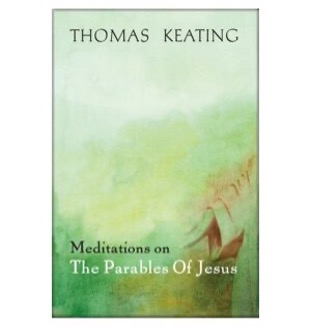
Meditations on The Parables of Jesus

“The parables help us to see how extraordinary a wisdom teacher Jesus really was and how revolutionary, in the best sense of the word, was the content of what he taught” Thomas Keating.

Thomas Keating shows you how to apply the profound meaning of the parables to your spiritual journey today.

Thomas Keating’s wisdom will help you:

  • Let go of your expectations about spiritual growth. 
  • Distinguish between momentary experiences and genuine transformation.
  • Look for the kingdom of God in the most unexpected places.
  • Welcome a more contemplative approach to your life.
  • Accept the pure gift of the kingdom of God.

“Hold your eyes on God and leave the doing to him. That is all the doing you have to worry about”. St. Jane Frances Dr Chantal. 1572 – 1641

Sold by Contemplative Outreach UK. £12.50 incl. p + p.  UK. only
Information from infocouk@btinternet.com


ON-LINE CENTERING PRAYER SUPPORT GROUPS.      

MONDAY AFTERNOON Weekly.

Every Monday at 3pm. Twenty minutes of Centering Prayer followed by a time for sharing and discussion. Normally finishes by 3:40pm. To participate send an email to: Hugh Reid at hugh_reid2@yahoo.co.uk.

WEDNESDAY MORNING fortnightly

Fortnightly on Wednesdays at 11 am. Twenty minutes of Centering Prayer then space to share for those who wish until 11:45 am. Contact Elaine at: elainewatson387@yahoo.co.uk

THURSDAY AFTERNOON Fortnightly
Fortnightly on Thursdays at 2pm. Twenty minutes of Centering Prayer. After the time of silence one of the ‘Guidelines for Christian Life, Growth, and Transformation’ from Thomas Keating’s book ‘Open Mind, Open Heart’ is read out. Participants then discuss the guideline. The meeting finishes at 3pm. 

To participate send an email to Sandra Ford at: sandra.ford32@gmail.com

On-Line Teaching Weekend

The Canticle by St John of the Cross.
Sat. 26th to Sun.27th June 21.
John’s overview of the Spiritual Journey set out as a love song,
the bride looking for her bridegroom.
A copy of the Canticle will be sent to you by e-mail.
To register, please e-mail infocouk@btinternet.com

A suggested donation of £20 to continue the work of C.O.UK would be appreciated.
Donate by bank transfer:
Account: 84444108. Sort Code: 40 37 25
or by cheque payable to Contemplative Outreach UK and send to
10 Hawthorne Ave, Higher Walton, PRESTON, PR5 4EE.

A new page on the website www.contemplativeoutreachuk.com “Calendar” will keep you updated on events.

Photography by kind permission of John Thompson

My Beloved is the mountains, The solitary wooded valleys, The strange islands, The roaring torrents, From The Canticle by St. John of the Cross.

LETTING GO OF THE SELF -MADE SELF. BY Thomas Keating OCSO.

Without thinking or feeling some emotion, there is just awareness. There is then no desire for bliss, enlightenment, or to teach others. Things are just as they are. In that so-called emptiness, enjoyment arises of itself. As soon as we try to enjoy, the enjoyment ceases. Somehow at the bottom of emptiness (openness, pure awareness,) there is the Divine Presence and the peace that surpasses all understanding.

If you bring the same emptiness and freedom to each moment and its content, you will be happy even in the midst of suffering. Accept everything and everyone just as they are, where they are, and try to act as lovingly as possible in every situation. Be ready to be led you know not where or when. Hush the discriminating mind dividing things into good or evil for me.

Fear draws us to the centre we have created the ego self. Divine Love expands from our real centre, the true self.

One feels the pain of others and must reach out to help them even when they are unaware of their pain. But one is content and at peace because one does not discriminate.

The true self is all colours of the rainbow and must expand to experience the whole of one’s being. One is not limited to one or two colours. One need not reject any colour but is to become all of them. The more colours one manifests, the more one manifests the Light that we are and the Light that we share.

Ladders and stages suggest leaving behind the previous rung or stage. Actually, one adds new dimensions to what one is, like a tree adds rings.

Take and accept yourself just as you are, where you are. If you are aggressive, lustful, fearful, or shy and withdrawn, notice your feelings before, during and after each incident, without emotional reactions of blame, shame, anger, or discouragement. Let God work with your faults and limitations. Just recognise them and be with them, without trying to correct them. As you watch them, feel them, accept them, their force and exaggeration will gradually diminish.

Keep moving to the centre of your being where Divine Love is and whatever bodily feeling or emotion that is happening. The present moment contains all we need to be happy. Only our attitudes have to change.  

Solitude by Chris Roe
Over the wooden gate,
Across the meadow
To the pond,
Surrounded by trees and bushes,
Tall grass and nettles,
And weeds of all descriptions.

Then, across the bridge,
Made of old tree trunks.
And dead branches,
Leading to the island.

From here we fished.
Hours of peace.
The silence disturbed 
Only by a moorhen,
Or fish and line
Upon the surface of the pond,
Perhaps a swallow,
In the late evening sun,
Flying low across the water,
Catching insects on the wing.

This was a secret place,
Away from the world.
A first glimpse of solitude,
So essential
For the journey to come.

In Memoriam

Fr. William Meninger OCSO died Sunday morning, February 14th at age 88 in his infirmary room at St. Joseph’s Abbey in Spencer, Massachusetts. The day before his death he led an international Zoom talk on the gospel of Mark.

Fr. Meninger was born in 1932 in Malden, Massachusetts, USA. He entered St. Joseph’s Abbey in 1963, made his solemn profession in 1970, changed stability to Snowmass in 1982 and changed his stability back to Spencer in 2020. He had been ordained a priest of the Diocese of Yakima, Washington in 1958. He had been in monastic vows for 55 years and 63 years a priest when the Lord called him.

The Human Condition Weekend Retreat.

 I, along with other Contemplative Outreach U.K. members recently attended an online retreat looking at ‘The Human Condition’. We were reminded of the key to our Centering prayer, that is, our INTENTION; here is our starting place, that place of consent to God’s will, action and presence which is where transformation and the healing of our woundedness happens.

Elizabeth guided us through two developmental models, the existential and evolutionary. This was the meat of the retreat and was absolutely fascinating as we explored how, as we go from birth and onwards to young children and beyond, we go through several layers of consciousness and all that comes with these layers … behaviours, needs, instincts, actions etc. As we did this, I was able to look back at myself in this period of development and could see these active levels and how they affected me, and where some of the behaviours were still being modelled in me… my own woundedness. Our memories are likened to computerised data files and are held within us in our unconsciousness from the womb, right up to the present day. Some memories will have a very strong emotional charge. As Elizabeth rightly and wisely reminded us, “… self-knowledge is very important, if we want to change and continue on our spiritual journey.”

We looked too at how helpful an ‘active prayer’ can be. These are short phrases of no more than 5-9 syllables that we can use throughout our day when our minds are not fully occupied, e.g., walking, housework, gardening etc. As we get used to repeating this prayer over and over, gradually, over time (and by this, I mean anything from 1-2 years), it becomes embedded within us in our unconscious and will naturally arise and thus begin to erase the ‘negative tapes’ that have played within us since early childhood. This takes time Elizabeth reminded us, but it sounds like an extremely useful tool to have in our practice, I have introduced my own active prayer phrase this week, “You are here, and I am with You.”

As well as teaching there were times of group Centering Prayer interspersed throughout the two days as well as time for a Q&A on both days. All in all, it was a great weekend of fellowship and teaching, and I would encourage you, to consider coming along to one of the next online retreats, there is so much we can learn and share with one another… but be warned it can be mentally tiring, so make sure you rest and prepare for these retreats, so that you get the best out of them. BUT Elizabeth was so helpful in reminding us that in all of this we should, ‘take the gentle path’. Allow God to lead you and ask Him what you should notice and take away with you.

Thank you, Elizabeth, and all of the fellow retreatants, for sharing such wisdom and real insight into this topic, it left me with much to reflect upon and ponder. I am now really looking forward to my next retreat ‘The False Self’, and I would recommend it to you all… come and join us. By Sandra Woodhall

Other comments on the weekend:

Thank you for a great learning experience last weekend. I found it very helpful returning to the teaching in a more up to date form. That took a lot of hard work so thank you again.  

By Margaret Bowers

It was good to be a part of such an informative and uplifting weekend. I find the opportunities to gather in this way so life-giving and am I sure that there is a cumulatively positive effect as each encounter builds upon the others! 

By Rev. David McCormick

A Holy Week Reflection

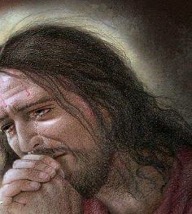
Imagine you are with Jesus in the Garden of Gethsemane after the Last Supper.  The air is thick, the night, pitched dark.  From his words at dinner, you have finally begun to realise that the end about which he has preached so much over the past few months is now at hand.  Jesus is in obvious anguish as he contemplates the days ahead, with full knowledge of what will befall him.  You overhear him praying that “this cup be taken from me…”, and his voice seems to trail off. 

At this point what would you do?  How would you react?  Would you reassure, sympathise, moralise…try to relieve him of the agony?  Would you have reflexively acted as a Rescuer?

What if you had rescued him?  If you had been successful and talked him down from the Cross, what would have happened?  How would his history—and—ours—have been different?

As Rescuers, at times we could be “saving” others from the mystery of their own transformation, which comes about through life’s little deaths and resurrections, all of which are part of the spiritual journey toward union with God.

Perhaps the best we can do, with an open heart, is to let others be.  Be open to them—to their pain and their joy, and act as midwives to their spiritual rebirth and ongoing conversation.

We simply cannot know the brilliant function of another’s pain, how it is transforming their lives, how it may be the very agent to bring them to a fuller union with God.  How God’s blessing may be hidden beneath seemingly distressing and agonizing circumstances.

Irene’s Updates

1. A group meets in The Meditation Chapels (Wisdom), at meditationchhapel.org every Friday 4.30pm -5.30pm who are studying Booklet 4, “Contemplation he Divine Therapy”.

2. A Durham prayer group meets every fourth Friday and they are beginning study of Transcript Part Two. “Models of the Human Condition” in May, contact peterbrookestrim@hotmail.com

3.On Spirituality and Practice website there is, The Spiritual Journey- Formation in the Christian Contemplative Life, with Contemplative Outreach. A one-year e-course.

U.K. Zoom Support Groups. 

1. Monday Afternoon Centering Prayer Group contact Hugh Reid at hugh_reid2@yahoo.co.uk

2. Thursday fortnightly Centering Prayer Group contact Sandra at sandra.ford32@gmail.co.uk

3. Wednesday Centering Prayer Group contact Elaine at elainewatson387@yahoo.co.uk
 On You-Tube at Coutreach are all of The Spiritual Journey videos to view.

Zoom Weekend Retreats.

If you are interested in any of these, please e-mail infocouk@btinternet.com quoting the weekend or weekends you wish to join.

The weekends will involve talks, 2 periods of Centering Prayer together each day. On the Sunday there will be time for questions. These weekend were first given as Retreats when silence was kept between the talks. You are invited, if your personal circumstances allow, to join these weekends as part of a Retreat at Home. You can also just do the course.

We ask for a small donation for these events to continue the work of Contemplative Outreach UK. e.g., £20 for a weekend. Do not let cost put you off, pay what you can, concessions available.

Bank transfer; HSBC; account 84444108 Sort code:40 37 25.

Cheques to Contemplative Outreach UK at 10 Hawthorne Ave, Higher Walton, PRESTON. PR5 44ED

Weekends -usually Saturday to Sunday.

Weekends.

1. Sat. 24th to Sun. 25th – April- The False Self, with Elizabeth Smith.

The self-enhancement motive is powerful and deeply engrained. It can hijack methods intended to transcend the ego and, instead, adopt them for its own service. This is what Thomas Keating called the False Self. This weekend looks at how the false Self is made and ways to dismantle it.

2. Sat. 26th JUNE to Sun.27th JUNE St John of the Cross, with Elizabeth Smith. This is an introduction to St. John of the Cross. The Canticle by St John besides being a beautiful poem takes us on an overview of the Spiritual Journey.

There are more weekends planned.

The biggest communication problem is we do not listen to understand. We listen to reply.

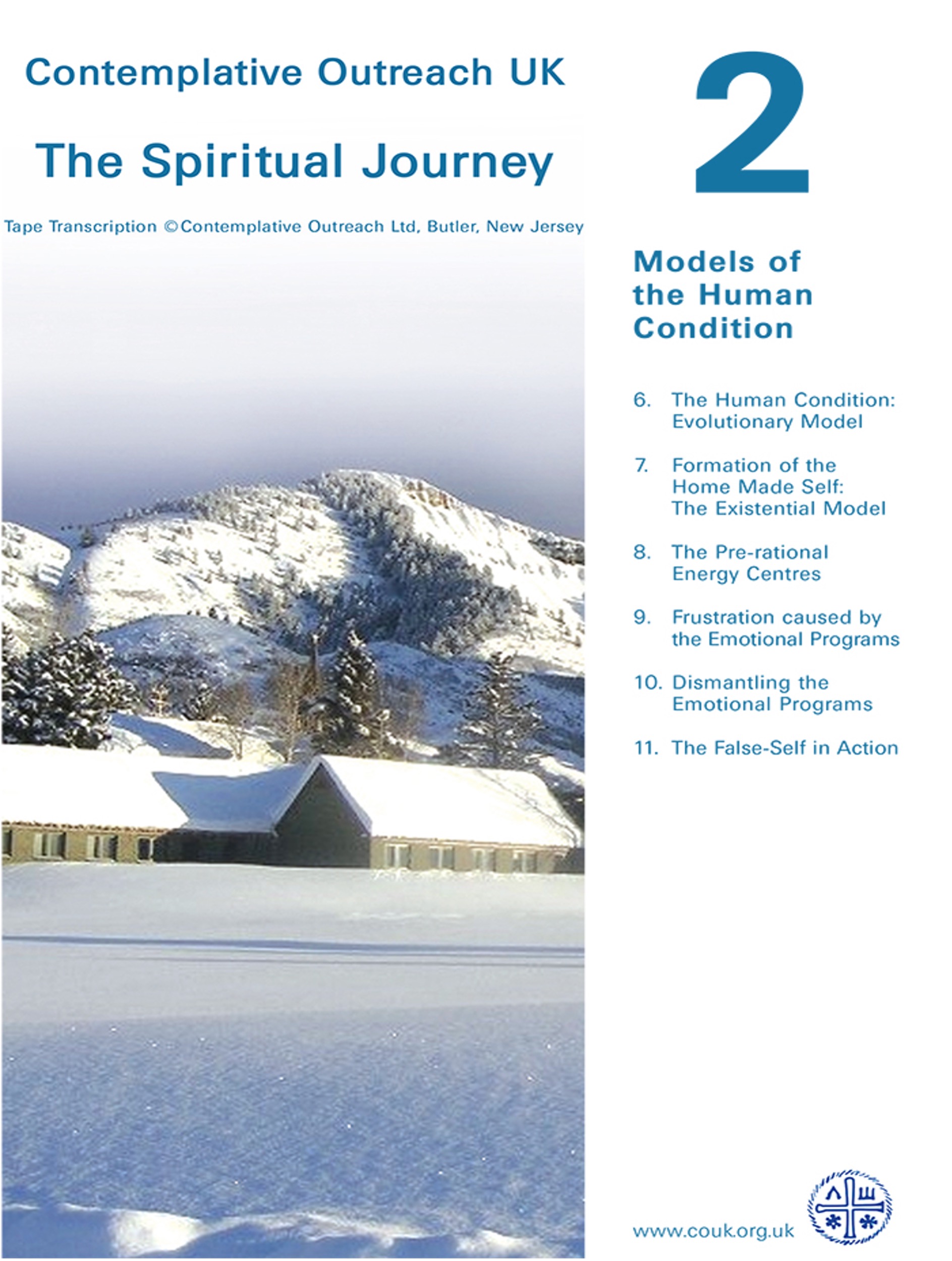
Models of the Human Condition

Sold by Contemplative Outreach UK. £12.50 incl. p+p.  UK. only Information from infocouk@btinternet.com

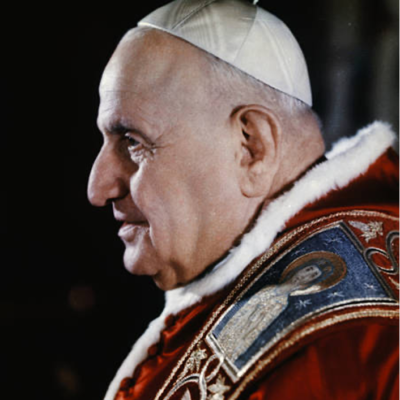
Picture 1

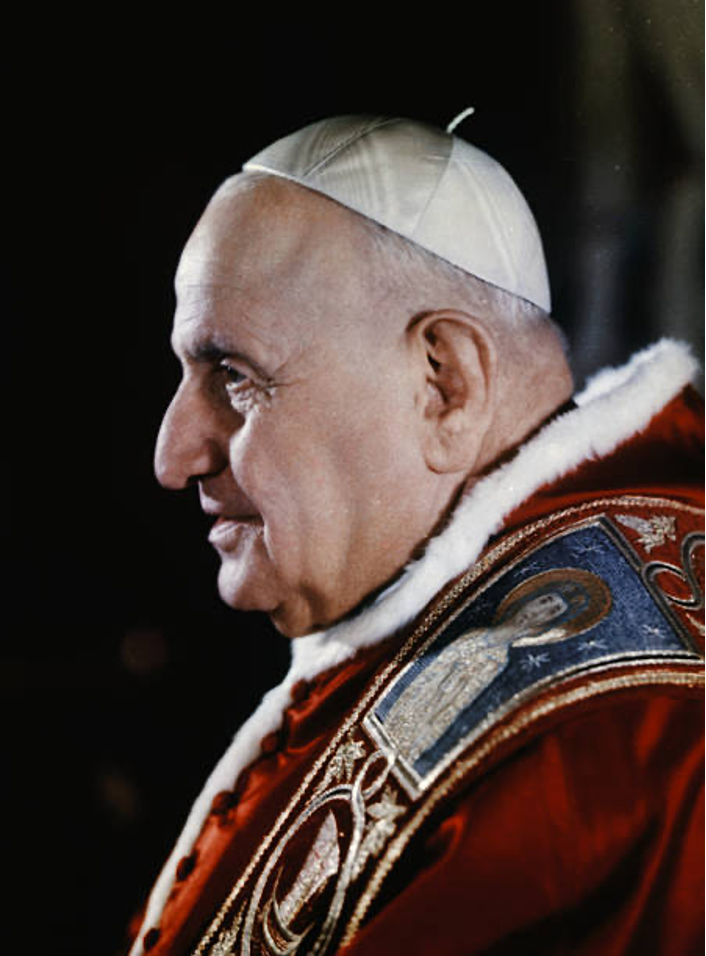
Pope John XXIII.

Peace on Earth

One of the programmes I recently watched on the Television was on the late Pope John XXIII. The programme inspired me to write the following article.

On 11th April 1963 Pope John XXIII signed his last Encyclical before his death. It was entitled, “On Establishing Universal Peace in Truth, Justice, Charity and Liberty. In short “Peace on Earth” derived from the opening words of the Encyclical. The full sentence reads,

“Peace on earth, for which all men of every era have most eagerly yearned, cannot be firmly established unless the order which God laid down is dutifully observed”.

It was the first Encyclical that a Pope addressed to “all men of good will”, rather than only to Catholics. Some have interpreted this to mean he was insisting that the responsibility for setting conditions for peace does not belong to the great and powerful of the world – it belongs to each and every one of us.

In this Encyclical Pope John states that conflicts,

“should not be resolved by recourse to arms, but rather by negotiation”. The Encyclical also clearly says, “that everyman has the right to life, to body integrity and to the means which are suitable for the proper development of life”.

Pope Francis in 2019 on a visit to Bulgaria invoked the Encyclical as a “code of conduct” for peace between Catholic and other religions.

As this year of 2021 begins let us take up these thoughts and renew and deepen our practice of Centering Prayer towards establishing Peace on Earth.

If you have time it is worth reading this Encyclical from Pope John XXIII, though you need to remember the language maybe outdated the insightful person will recognise the sentiments which we still need in 2021. Pope John was expected to continue in the traditional way of Pope Pius XII. He surprised everyone by calling a Council for the first time in a hundred years for the Catholic Church to look at itself and renew itself. Vatican II. It may seem that something from the 1960’s will have nothing to say to us in 2021. It speaks clearly to the problems of today.

• The first section establishes the relationship between individuals and humankind, encompassing the issues of human rights and moral duties.
• The second section addresses the relationship between man and state, dwelling on the collective authority of the latter.
• The third section establishes the need for equality amongst nations and the need for the state to be subject to the rights and duties that the individual must abide by.
• The final section presents the need for greater relations between nations, thus resulting in collective states assisting other states. The encyclical ends with the urging of Catholics to assist non-Christians and non-Catholics in political and social aspects.

Picture 2

In Memory

Please remember in your prayers Peter Jacques from Essex who died on 4th December 2020.

Peter was a long-time member of Contemplative Outreach U.K. and he shall be missed. Many he rest in peace.

Also let us prayer for all those who have lost loved ones to the Coronavirus.

Why does Meditation not bring forth the fruits it should?

Picture 3

A recent research project carried out by a Dutch Professor says that instead of reducing self-enhancement meditation may have the paradoxical effect of boosting superiority feelings. In an article written on the research it states that “the self-enhancement motive is powerful and deeply engrained so that it can hijack methods intended to transcend the ego and, instead, adopt them for its own service.”

The above is for me a clear description of what Thomas Keating called the False-Self. He clearly tells us that the false self can easily adapt itself to any situation even the spiritual journey. We need to become fully aware of our False Self and work to dismantle it. This year, via Zoom, there will be Weekend Retreats on the Human Condition and the False Self to give us the insights and tools to help us.

If you are interested in these talks please e-mail infocouk@btinternet.comfor more information.

Screenshot 2021-01-14 at 14.14.58

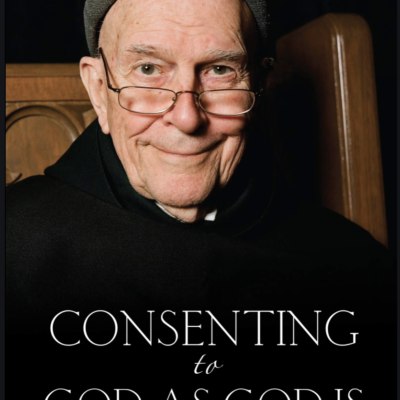
Consenting to God as God is.

A book to be read by anyone who is in contemplative service especially those who are in leadership within Contemplative Outreach.

“This book is addressed primary to people with some personal experience of the spiritual journey……. The material in the book is addressed to people who have been practicing Centering Prayer for several years, who are familiar with its immediate conceptual background.”

Thomas Keating.

Picture 5

Amazon Prime.

Starring: Father Thomas Keating and John Osbourne
Directed by: Elena Mannes and Peter C. Jones

This DVD was showed in March by Contemplative Outreach UK with kind permission from Peter C. Jones. It was shown as on the second anniversary of the death of Thomas Keating. The article below is by one of those who viewed it on that day.

“This is a beautifully conceived and crafted piece of filming making, and it is, it is even more a beautiful insight into the life, thinking and teaching of Thomas Keating. In just twenty-seven minutes the film makers present an inspiring and deeply moving expose of the call to the contemplative path and Father Thomas’ contribution to our understanding of it. Touching on everything from God as a ‘superb’ psychotherapist, to our deification and the contemplative potential that we all carry within us.

During the film we learn of Fr Thomas’ own journey into prayer and contemplation. He considers the human condition and the obstacles it presents, how the child in prayer becomes an adult and how God becomes ever more approachable through the transformative process of prayer; it is on this more mature level of relating that God becomes known directly as we die to our false self and learn to let go of the images of God we cling to. We are then invited to consider the process of dying itself as the ‘birth canal into eternal life’, a new and greater life. It is this new and greater life that we begin to taste through deep contemplative prayer, a pure and gratuitous gift of God, as we learn to live a life of constant dying and rising within the God in whom we live and move and have our being.

I cannot recommend this film enough! Do find the half hour needed to sit in the company of a spiritual master with an open mind and open heart; drink deeply from the wells of wisdom shared in this beautiful film, let go of the busyness and distractions that may prevent you from beholding its treasure!

I will finish by allowing Fr Thomas the last word as he invites us to learn the art of ‘letting go”, just being, being the manifestation of God in our particular uniqueness.’”

By David McCormick.

• If you are interested in Zoom Centering Prayer Groups e-mail infocouk@btinternet.com writing Groups on subject line

• Zoom Retreats infocouk@btinternet.com writing Retreats on the subject line. • If you have any thing you would like to send in for the next Newsletter e-mail to the above address and write Newsletter on the subject line.

• KEN Wilbur good as new books-interested e-mail and write Ken Wilbur on subject line.

• If you wish to unsubscribe to the Newsletter please send an e-mail with the word UNSUBCRIBE on the subject line.

Thank you.


Prayer is a deep intimate relationship with the Ultimate Reality. It is a journey of self-awareness, self-acceptance, and self-realization.

A journey which takes us the centre of our being where we meet the Creator of All.

Prayer as a way of life. PART 1

If we are to take St. Paul’s words seriously in 1Thessalonians Ch 5 v17, “to pray without ceasing,” then pray must mean more than the act of saying prayers. It must mean more than merely reading suitable material, church attendance, prayer circles or anything of that kind. A person of prayer is not necessarily a person who says several offices or abounds in detailed intercessions.

The act of prayer is meant to establish life as a prayer. It is not meant to be a separate unit. It would be foolish to forget that the act of prayer plays an essential part in making life a prayer. In deep prayer our life can begin to change from self-oriented to one that is oriented towards God, the Ultimate Reality, with our whole being.

The very heart of prayer is the opening of the human personality to the all penetrating and all purifying Divine activity. This is the Divine Therapy. Prayer is a spiritual activity which brings God and us into communion with one another, into a deep intimate relationship if we agree.

In this relationship one comes to see that it is God who is the prime mover. It is not an escapist pie-in-the-sky activity. The way of prayer will bring us face to face with our false self that seeks to live for itself alone.

True prayer is not just praying with our lips, our intellect or imagination but out of the very roots of our being. It is coming to know God through a dark night of faith, letting go of all preconceived ideas, whilst becoming conscious of an inner awareness that God is not out there or anywhere in particular but closer than we are to ourselves. It is in this intimate union with God that we can grow to full Christian maturity.

The first consideration in a life of prayer is to make time for prayer. A weekly time is just not enough. It demands a daily commitment, otherwise the whole affair will become very hit or miss. Fidelity to the time we choose shows our commitment to this relationship, bearing in mind our other duties in life. True prayer will help us to put first things first, will curb the selfishness that seeks only its own pleasure and satisfaction. This calls for a certain amount of discipline and detachment through love. At times it will appear to be an apparently useless waste of time. We need humility to accept this waiting on God. It brings us to acknowledge our own limitations and the dark side of our personality. We must learn patience with ourselves which can teach us compassion and understanding for others. We learn to love which benefits all those who meet us.

We begin to think of others, how to help and support them, especially those nearest to us, our family, and friends. We learn to love which benefits all those who meet us.

Therefore, it is necessary to withdraw in order to overcome the superficial level which characterizes so much of our lives. We need time to awaken the deeper awareness, to develop our spiritual senses which will enable us to love continually and consciously in union with God through His Spirit praying in us.

Rom.8:26 “In the same way the Spirit also helps our weakness; for we do not know how to pray as we should, but the Spirit Himself intercedes for us with groanings too deep for words”

Our main approach to prayer and to life should be that of giving, of courage, of willingness to embrace the trials, not just the consolations and joys however pleasant.

Prayer is comparable with the deepening of an intimate, loving human relationship. In time you gradually reach a stage where you can just relax in silence together. Prayer is not measured by the number or beauty of words. It is meant to flow from the centre of our being, from the heart. To be continued…

Copy right belongs to the author.

Classical Lectio Divina Workshop. By Elizabeth Smith, October 2020

Comments.

“I truly felt that I was in a place of safety. The weekend was a real moment of healing for me, which I know will be ongoing ….

I am thankful to have had the opportunity to join with everyone. I was very moved as well as challenged and comforted. The reading you gave us affected me deeply and I think it was the right thing for me at the right time. It will be with me for the rest of my life – though I realise it may lead me where I would rather not go at times!!

I am incredibly grateful for the insights and encouragement of the retreat you led which has helped to retune me to be attentive (sometimes!) and to appreciate the graces that it allows.” – Sent in by A. Murray

Classical Lectio Divina- sent in by Elaine Watson

“Years ago, I attended a day retreat at one of my local churches. I cannot remember all the details, but I still carry the power of that experience which I think was a meditation rather than a lectio. It was the story of the wedding feast at Cana. I think there was something about the power of the group that enhanced the experience.

I felt this same power during the lectio weekend even though it was on zoom. The process was ably steered by Elizabeth and Sandra for about eight of us.
It was delivered with Elizabeth‘s great knowledge, experience and skill, slowing down the whole process so we received a considered deep teaching on how to do it using the parable of the prodigal son.

I had a deep spiritual experience as I think perhaps we all did in our different ways. I felt Jesus’ closeness and an intimacy which spoke to my heart about my own relationship with God. Since then I have had deeper intuitions about myself and my relationship with Jesus and how I operate in this world. It is wonderful, I shall certainly continue. I feel I have a new and invaluable spiritual tool to enhance my relationship to God, with myself and others. Thank you, Elizabeth.

12 STEP CENTERING PRAYER COMMUNITY

Throughout this year the 12 step CP community in the US and Europe have joined together to form online meetings.

There are several meetings every day of the week.

More details can be found here cp12stepoutreach.org

They are open to anyone in 12 step recovery.

The U.K. based one is every Saturday at 3pm. Dozens of people – some with many decades of CP experience- from around the world meet, do a sit together and share about how this simple practice manifests in their lives. It has been a high spot of this challenging year for many of us.
Please feel free to share the link.

Join Zoom Meeting
https://us02web.zoom.us/j/371135351?pwd=5KSVhjKvaBiR5bqe7NDQAw

Meeting ID: 371 135 351
Password: guttermonk

Thank you for your continued Service, Howard B.

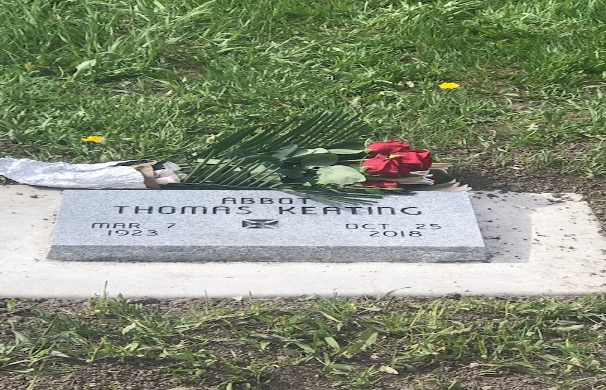
Fr. Thomas Keating – 7th March 1923 to October 25th, 2018

Contemplative Outreach UK hosted “An Afternoon with Thomas Keating”, on zoom, in memory of Father Thomas’s second anniversary of his death on October 25th, 2020.

It was a truly international event, with Father Carl Arico attending and others from various countries.

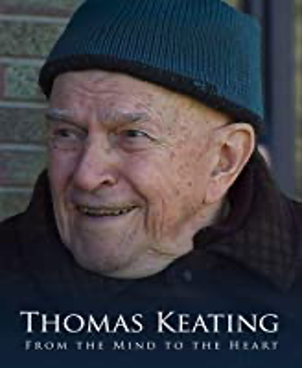
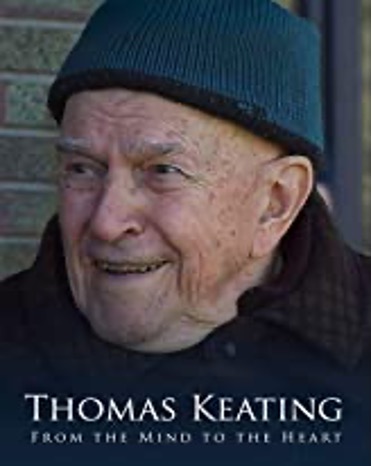
Elizabeth Smith had been given permission from his nephew Peter Jones to show the DVD “From the Mind to the Heart”, which was one of the last interviews given by Father Thomas at St Benedict’s Monastery, which composed of a profound ,revealing, spiritual discussion ranging from spiritual transformation to transcendence to death and dying.

A very memorable afternoon was enjoyed by all and we left with much food for thought nourished by our spiritual master and teacher. Sent in by Irene Anderson

Amazon UK – “From the Heart to the Mind” Thomas Keating

Rent from £3.49 OR Buy from £7.95

Renowned theologian Father Thomas Keating engages in a profound, revealing spiritual dialogue ranging from spiritual transformation to transcendence to death and dying.

Genres
Faith and Spirituality, Documentary

Director
Elena Mannes, Peter C. Jones

Starring
Father Thomas Keating, John Osbourne

Rentals include 30 days to start watching this video and 48 hours to finish once started.

Contemplative Outreach UK on Zoom

If you are interested in Zoom Centering Prayer Groups or would like to start one, please contact infocouk@btinternet.com

If you are interested in Workshops and Courses via Zoom arranged by Contemplative Outreach UK

Please contact infocouk@btinternet.com

If you would like to host an Introductory Day on Zoom, please contact
E.M. Smith. B.Ed. at infocouk@btinternet.com

Photo’s courtesy of Jon Thompson www.jonthompson-photography.com

A thought for our times.

We may think we are opened minded, socially conscious, anti-racist. Yet we all have old learned hidden biases that we need to exam. It is our responsibility to check ourselves daily for stereotypes, prejudices and ultimately discrimination of any kind.

Letting Go of the Self-Made Self. by Thomas Keating OCSO

Without thinking or feeling some emotion, there is just awareness. There is then no desire for bliss, enlightenment, or to teach others. Things are just as they are. In that so-called emptiness, enjoyment arises of itself. As soon as we try to enjoy, the enjoyment ceases. Somehow at the bottom of emptiness (openness, pure awareness,) there is the Divine Presence and the peace that surpasses all understanding.

If you bring the same emptiness and freedom to each moment and its content, you will be happy even in the midst of suffering. Accept everything and everyone just as they are, where they are, and try to act as lovingly as possible in every situation. Be ready to be led you know not where or when. Hush the discriminating mind dividing things into good or evil for me.

Fear draws us to the centre we have created, the ego self. Divine Love expands from our real centre, the true self.

One feels the pain of others and must reach out to help them even when they are unaware of their pain. But one is content and at peace because one does not discriminate.

The true self is all colours of the rainbow and must
expand to experience the whole of one’s being. One
is not limited to one or two colours. One need not
reject any colour but is to become all of them. The more colours one manifests, the more one manifests the Light that we are and the Light that we share.

Ladders and stages suggest leaving behind the previous rung or stage.

Actually, one adds new dimensions to what one is, like a tree adds rings.
Take and accept yourself just as you are, where you are. If you are aggressive, lustful, fearful, or shy and withdrawn, notice your feelings before, during and after each incident, without emotional reactions of blame, shame, anger, or discouragement.

Let God work with your faults and limitations. Just recognise them and be with them, without trying to correct them. As you watch them, feel them, accept them, their force and exaggeration will gradually diminish.

Keep moving to the centre of your being where Divine Love is and welcome whatever bodily feeling or emotion that is happening. The present moment contains all we need to be happy. Only our attitudes have to change.

The Secret Embrace is now back in stock on the USA website: www.contemplativeoutreach.org

Thoughts on Lockdown

By Sian Griffith

“My immediate response to lockdown was one of relief, as obligations fell away. I had not realised how busy I had made my life. I revelled in the peace and cleaner air. Then I had to quarantine for 14 days. I found that deeper level of lockdown frustrating and confronting. Memories floated up unbidden in the stillness, and wounds I thought had healed reopened. I found myself repeating the Jesus prayer, whenever I felt assailed, and that brought
comfort. Prayer, in all its forms, has become more important to me. As we emerge now from lockdown, I pray for discernment in choosing who to meet, what to do, and where to go, so I keep space in my heart and my life for what matters.”

By Irene Anderson

“At the peak of the pandemic whilst in social isolation, my husband and I received an urgent telephone call for help, from his sister who lives nearby. Her husband, David, had collapsed and she needed immediate help from us, until an ambulance could attend. We went to assist her, and he was taken into hospital. Two days later, she was informed that he had tested positive for covid-19, and within a few days he unfortunately died. We then needed to quarantine for 14 days. It was an anxious time for both of us, as we tried to support my sister-in-law by phone.
But for me, my daily practice of Centering Prayer sits, and the Welcoming Prayer, gave me the spiritual tools I needed to get me through those 14 days until we found out that we were both ok.

Very strange times, but I knew that God was present and saying, “You will be ok”.”

By Elaine Watson on a quote by James Finley

“Any time we deeply commit ourselves to a path in life, the path metamorphoses us. It transforms us in unforeseeable ways……our deepest understanding and experience of who we are.” James Finley
This has been happening to me on my committed path in lockdown.

By Irene Anderson

Spiritual Journey, Transcript 1. A study plan was organised, to begin the first session in April 2020. However, just as we were about to begin, the pandemic arrived, and we went into lockdown.
The group leader, undeterred, suggested that we continue to meet and study virtually, by zoom. It seemed a bit daunting at first, but it has enabled us to continue with the study plan in the safety of our homes and so far, has been a very useful way to meet, discuss and share.

By Jenifer Vanstone

This time has been an opportunity, a blessing and sometimes very revealing and challenging.

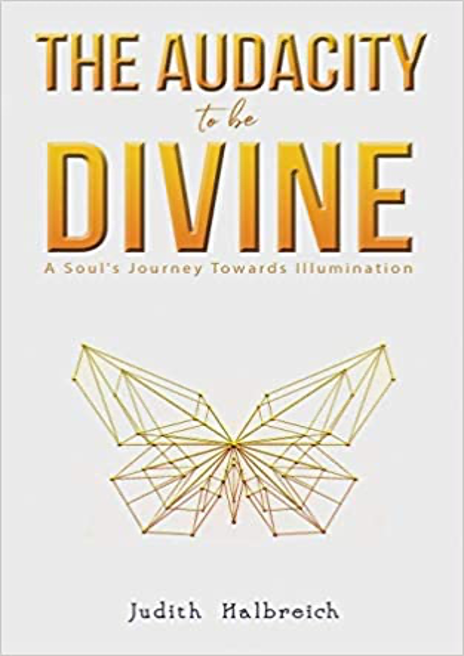
A NEW BOOK about the co-founder of Contemplative Outreach. USA

FOR IMMEDIANEW RELEASE: YORK, NY –

The Audacity to be Divine: A Soul’s Journey Towards Illumination, by Judith Halbreich, is a ground-breaking, compelling story about the arduous journey towards transformation and illumination.

It is written for contemporary sceptics and truth-seekers who can identify with the true intimate story of the eternal quest for spiritual truth in the context of our time—a time of crises, uncertainties, and mounting paradoxes. Even as threats to us and to our ways of life intensify, we will find solace in Mary Mrozowski’s story.

The book describes the transformation of an ordinary suburban housewife to a charismatic activist and a spiritual leader role- model. Upon her death, thousands of crying followers crowded the church to mourn the woman that
many considered to be a modern-day Saint, Mary of Chrysalis House, the lay spiritual contemplative centre that she established.

The story is told by her daughter who intimately witnessed the trials and tribulations of a penniless catholic divorcee who initially lost faith but then redefined old-time Western and Eastern spiritually to develop new strengths. She taught her techniques of acceptance and overcoming pain to thousands of her disciples. An elegant, spiritual, optimistic role-model, radiating the Divine, the image of Mary in a bright red dress and high heels will stay with you for life.

The Audacity to be Divine, published by Austin Macauley, was released on June 20th, 2020. Price: $12.95, ISBN: 9781645363613. It is available on Amazon, Barnes & Noble, and in other bookstores throughout the country. Review copies are available upon request.
For more information, please visit:www.austinmacauley.com/us.

Retreats and Workshops.

Unfortunately, due to the Coronavirus planned Retreats during the summer have now been cancelled. The Presenter Workshop and the Lectio Divina Retreat are under review awaiting Coronavirus developments and what will be considered safe. Notification of Zoom meetings and talks will be sent by e-mail.

Please e-mail infocouk@btinternet.com to register your interest.

There are two updates to share since the 2020 April 30 – May 2 conference with Cynthia Bourgeault.

1. The video recordings are now public on the Contemplative Outreach YouTube channel for all to enjoy. Please feel free to share.

Session 1: https://youtu.be/HLQYx9sZHMY
Session 2: https://youtu.be/EY0WpDgdAnM
Session 3: https://youtu.be/zffJMQzlcn4

2. The book, The Secret Embrace, is finally back in stock. Go to www.contemplativeoutreach.org The website for the USA

Spirituality and Practice

THOMAS KEATING’S THE SECRET EMBRACE — A NEW E-COURSE WITH CYNTHIA BOURGEAULT

Cynthia invites you to register for her brand-new online course on Thomas Keating’s The Secret Embrace, offered through Spirituality & Practice from August 31 through September 25. This course focuses on the eight poems in Keating’s The Secret Embrace, his final spiritual legacy to the world, which he composed the last winter of his life.

MEDITATION CHAPEL – supports groups of all faith traditions in offering and sharing the contemplative experience through sacramental technology.

See www.meditationchapel.org

The free Contemplative Outreach app for Centering Prayer is available for iPhone and iPad and Android phones.

You can find the app in the iTunes App Store or the Google Play Store
Contemplative Outreach UK. www.contemplativeoutreachuk.com

SILENCE is the paper on which the ink of human consciousness is printed…
Silence, more than anything else within us, is like the doorway to the presence of God.
Carl McCoy
lman.

These weekends are sets of talks by Elizabeth Smith.

If you are interested in hosting one of these weekends contact Elizabeth at

infocouk@btinternet.com

Introductory  Weekend.
An introduction to the method of Centering Prayer.

The False Self.
Looking at the blocks we create to the spiritual life.

The Human Condition.
Understanding ourselves and others. Introduction to the Night of Sense.

The Divine Therapy.
God’s healing touch in the Dark Nights.

Purity of Heart.
The way to happiness. Letting go of the afflictive emotions.

Lectio Divina Weekend.
Going deeper into the Word of God.  A contemplative approach.

An Introduction to St. John of the Cross.
Looking at the overview of the spiritual journey for to-day using St. John’s
Spiritual Canticle.

The Dark Nights and Depression. Looking at the classic Dark Nights and how it differs from Clinical Depression.

Two people walking in a garden

For further information about these programmes please e-mail – infocouk@btinternet.com

Introductory Days.

Introductory Weekends.

Various Weekends on subjects covered in Spiritual Journey.
A basic Five-day Centering Prayer Retreat.
Five Day and Ten-Day Intensive Retreats.
Post Intensive Retreat.
Lectio Divina Weekend.
Quiet Days.
External Study Programme.
Developing the Christian Contemplative Tradition.

  1. St. John of the Cross Day.
  2. The Cloud of Unknowing.

Facilitator Formation.
Formation for Contemplative Service.

For the first 12 centuries, contemplation was the normal development of a mature sincere life of prayer.

In the 12th Century, there was an urge to bring more order and method in to prayer. The rising advent of schools of theology meant that scripture was removed from vocal prayer. For various historical reasons prayer began to be compartmentalised.

By the 16th century discursive meditation (thinking about the text), affective prayer (talking to God) and contemplation (being caught up in God) were separate units, distinct ways of praying rather than a series of movements led by the Spirit which could occur in a single period of prayer. Contemplation was regarded as an extraordinary grace, reserved for the few and all but forgotten.

In the 20th Century, a revival began largely due to such people like Thomas Merton. Today we have people like Thomas Keating, Cynthia Bourgeault, Richard Rohr and many more continuing to explore the tradition to facilitate the gift of contemplation.

Our Address