Archives!


Nothing is more beautiful than the uniqueness that God has created. | You don’t have to create the beauty – you’ve got the beauty. | You don’t have to create the freedom – you’ve got it. | You don’t have to create the image of God in you – you have it. | You don’t have to win over God’s love-you have more than you know what to do with.

From “Heartfulness: Transformation in Christ,” Thomas Keating.

“Centering Prayer” Retreat by ‘Contemplative Outreach UK’,
Buckfast Abbey, Feb. 25. To 4th March 2019.

Reflections by Kathie Salter

I am here on this retreat, for a small group, based on the teachings of Fr Thomas Keating. O.C.S.O. The retreat by Contemplative Outreach UK used the teaching of Fr Keating, described in his books, “Open Mind, Open Heart” and “Invitation to Love”.

Fr. Keating based his theory and method of Centering Prayer on the classic spiritual manual, ‘The Cloud of Unknowing’. We were told that the easiest translation into modern English is by Carmen Acevedo Butcher, by Shambala. Obtainable through Amazon.
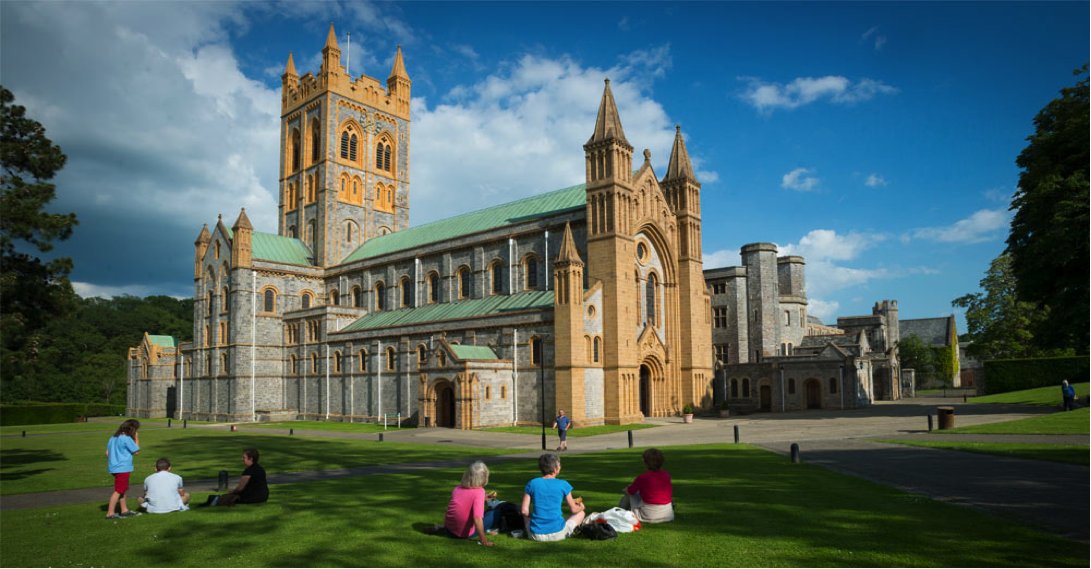
Buckfast Abbey

“The method of Centering Prayer talk 1” by Thomas Keating

This talk gives the basics you need to practise this form of prayer at home.

I have found that the general idea in every retreat has been to get quiet inside, so that God can find me and interact with me, and change me as He wishes, so that I go home much more able to stay close to him as I go about my life, and so to bring His love and peace and joy etc. to others. Each retreat has had long periods of silence to make this possible.

It is a wonderful experience to spend uninterrupted time with God among other people all doing the same thing, away from my normal responsibilities. The accommodation and food at Buckfast were excellent.
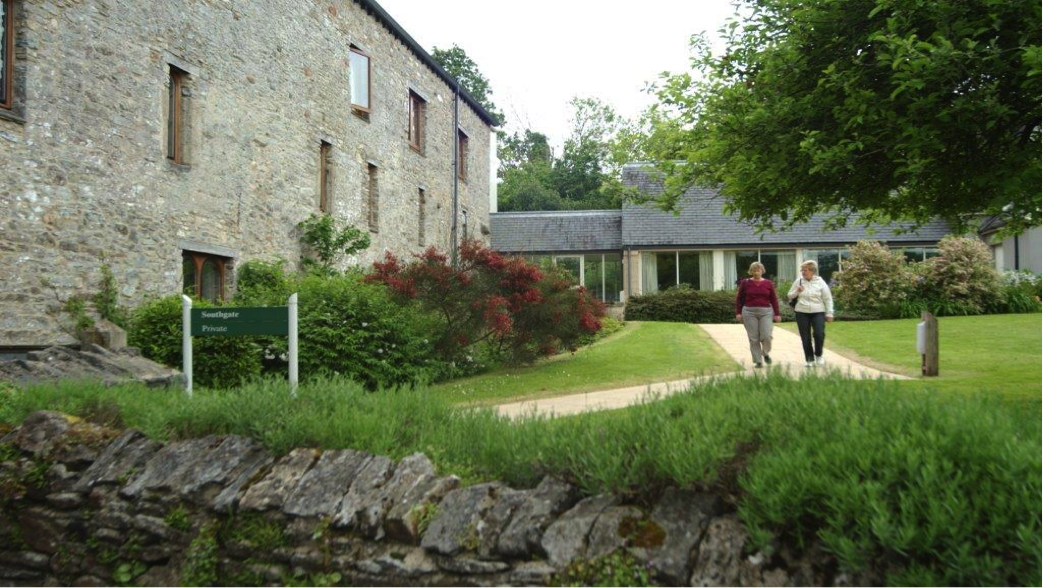
Two people walking in a garden

This Retreat had videos of instruction and sessions with the group and leader each day, to help us to grow spiritually and to master the method, and many sessions of the practice of Centering Prayer together in silence.

Basically, the method of Centering Prayer involves being quiet, accepting whatever thoughts come, but letting them go by repeating a “sacred word” of our choosing. Not judging ourselves. Opening to “God’s presence and action within us” in silence.

Doing this twice a day over months and years, Fr. Thomas teaches, enables God to bring about real change for the better in our personalities. Fr Keating called it “the Divine Therapy”. This retreat is helping me to get established in the practice and giving me quiet time with God.

Weekend and longer Retreats can be arranged by contacting Elizabeth at infocouk@btinternet.com. If you would like to host an Introductory Day, please contact E.M. Smith at infocouk@btinternet.com

Newsletter Contribution

If you would like to contribute to the Newsletter, tell us how you came to Centering Prayer or write about your group, review a book or write a poem. Please do and send your work to infocouk@btinternet.com marked “Newsletter” and don’t forget to include your name.

Twilight of the Self”
A poem by Thomas Keating.

My heart is solitary now.
It finds no companionship anywhere
And no wish to find any.

My sole desire is You,
And you are always absent.

Can one love absence so intensely
That even your presence
Seems like an intrusion?

I move around in aimless circles.
Rituals and sacred symbols,
Once treasured sources of relating to You,
Are meaningless to me now.

They communicate nothing of You,
Who are everything to me,
But for whom and from whom I feel no love,
Nor hope of fulfilment.

I am as one turned inside out,
And there is nothing there – not You, not me.
If this is union, there is neither two in One,
Nor one without another.

I long to relate to everyone,
Yet lack the capacity to relate to anyone.

There is only Your boundless presence
That treats me like a thing without a heart,
Except perhaps a broken heart.

For the God I thought I knew
No longer exists.

Reprinted here by kind permission of Peter C. Jones
A Rising Tide of Silence LLC | 30745 Pacific Coast Highway | Suite 279 | Malibu | C.A 90265

Sunlight through trees
Photograph reproduced here by kind permission of Jon Thompson – www.jothompson-photgraphy.com
Ann O'Donnell

Ann O’ Donnell

27th July 1933 – 28th March 2019.

It is with sadness that I pass on the news of Ann’s death. Ann was one of the first to join C.O.UK and was very committed and faithful to the practise of Centering Prayer and the teachings of Thomas Keating which supports the practise. Ann’s group met in her house since she started. She was one of the first Co-ordinators having gone through the programmes and training required and set out by Thomas Keating.

I am sure of you will remember Ann for her fund raising efforts for C.O.UK especially the beautiful silver medallions she made of the Logo. As special commissions Ann also did a few in gold. Ann also gave a monthly donation to C.O.UK.

Her funeral was held on Thursday 11th April in Leeds.

Ann will be greatly missed for her talents and her wisdom. I shall miss her for her loyalty and integrity and support throughout the many years. Elizabeth

Can you help C.O.UK?

This Newsletter is the first since last year. In May 2018, as some of you may know, I had a major operation to have a kidney removed because of a cancerous growth on it. This took some time to recover from especially as it came quickly on a previous operation again for cancer in November 2017. Thankfully both operations have been a success and at the moment I am clear of cancer.

This year 2019 I have not done as much as usual. It has made me think in terms of making provisions for C.O.UK to continue when I retire.

Many of the original group that started C.O.UK with me over 30 years ago are now too ill to continue or have died. These generous people all worked as volunteers and gave their time freely.

This is a sad fact. It would be a pity to see the hard work of many silent practitioners come to nothing. If C.O.UK is to continue we need more volunteers and donors. It should be mentioned that Retreat fees only cover costs. This is to keep the price of Retreats as low as possible to enable people to attend. This means nothing remains for C.O.UK.

I am sure many have benefited because of what C.O.UK has offered in the past. What is C.O.UK worth to you? To pray costs nothing but to organise and support does come with a cost. Time is very precious to us all but one person doing everything makes what they can do very limited. We need more generous and willing volunteers
C.O.UK covers a wide area and tries to support those in the North of England, Wales, Scotland and Shetland. It would be great to have more contacts in these areas.

C.O.UK needs those who are willing to train as Presenters, and act as Facilitators. There are many but the labourers are few.

Opportunities

  • It would be good to have a booking secretary to co-ordinate the days and retreats etc.
  • A treasurer to keep the books and produce yearly accounts which at the moment is not a big job. If you can do a spread sheet you could do it.
  • A network person to keep in touch with individuals and groups.
  • A Newsletter editor.
  • A person to network with the Volunteers
  • Perhaps a few who have the time could be on a small informal committee.

Ideally all volunteers should have a regular practise of Centering Prayer for over a year.
If you have a talent which you think may help and the times please get in touch.

If you do not have time to volunteer could you support C.O.UK with a donation no matter how small? Is C.O.UK worth a cup of coffee or two?

If you would like to donate to help continue the work no matter how small please get in touch.
Without your help as a volunteer or a donator C.O.UK will in time disappear.

Do you want C.O.UK to continue? If so please respond by e-mailing infocouk@btinternet.com.

Return to the Basics

Before his death Thomas Keating encouraged all to return to the basics. C.O.UK offers the following Weekend/Day Programmes based on the core teaching by Thomas Keating on the Spiritual Journey. These are the foundations for all the other teachings by Thomas.

If your group is interested in any of these please get in touch by e-mailing infocouk@btinternet.com.

  1. Introductory Day or Weekend.
    An introduction to the method of Centering Prayer.
  2. The False Self.
    Looking at the blocks we create to the spiritual life.
  3. The Human Condition.
    Understanding ourselves and others. Introduction to the Night of Sense.
  4. The Divine Therapy.
    God’s healing touch in the Dark Nights.
  5. Purity of Heart.
    The way to happiness. Letting go of the afflictive emotions.
  6. Lectio Divina Weekend.
    Going deeper into the Word of God. looking at the Classical and Scholastic ways of praying the Scriptures.Also:
  7. An Introduction to St. John of the Cross.
    Looking at the overview of the spiritual journey for to-day using St. John’s Spiritual Canticle.

Dates for your Diary 2019

May 2019

Centering Prayer in Preston.

What is it? How to do it? Is it for you?

Tabor Retreat Centre
Sharoe Green Lane, Preston, PR2 8HE

DATE: Thursday 9th May 2019
TIME: 6pm to 8:30pm

Suggested donation: £5.00 on the night to cover costs.

Presenter: Elizabeth Smith has 36 years experience with this prayer.

June 2019: Weekend Retreat.

That We May be One

DATE: Fri. June 21st, 5pm approx. to after lunch on Sun. June 23rd.
VENNE: Monastery of Our Lady and St.Bernard’s, Stroud

The Retreat continues and builds on the works of Thomas Keating over the past 30 plus years.

• Some of the topics include: The Western and Scriptural Models of Spirituality
• The Self and Evolving Consciousness,
• Christian Non-Duality and Unity Consciousness,
• The Present Moment and All that Is.

Time will be set aside for discussion in small groups on the above topics.
There is a moderate amount of Centering Prayer, Silence and Solitude.

Total cost is £120 per person in single room. A £25 deposit is required to secure a place before 20th May or sooner.

Payment by cheque payable to “Contemplative Outreach UK” or by Bank transfer. For Bank details email infocouk@btinternet.com

October 2019: Weekend Retreat

A Deeper Look at Centering Prayer and how to deepen our relationship with God.

DATE: Fri Oct.11th to Sun. Oct.13th 2019
VENNE: Hyning Hall, Carnforth, Lancs.

A time to reflect and take a deeper look at the Method of Centering Prayer. We will look at the four moments of Centering Prayer and the process it begins. Plus practises which extend the prayer into daily life.

There will be time for Centering Prayer, discussion, silence and solitude.

Total cost is £120 per person in single room. A £25 deposit is required to secure a place.

Payment by cheque payable to “Contemplative Outreach UK” or by Bank transfer. For Bank details email infocouk@btinternet.com

Open Mind; Open Heart

by Thomas Keating

“The root of prayer is interior silence. We may think of prayer as thoughts or feelings expressed in words. But this is only one expression. Deep prayer is the laying aside of thoughts. It is the opening of the mind and heart, body and feelings – our whole being – to God, the Ultimate Mystery.”

Open Mind; Open Heart. by Thomas Keating.
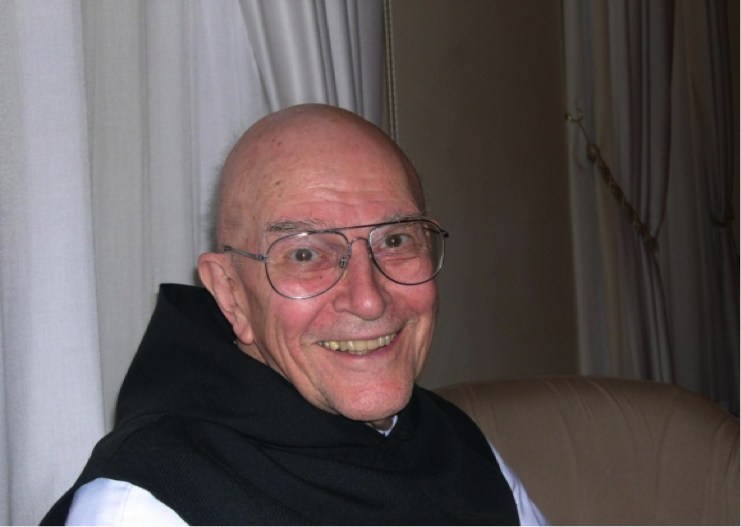
Thomas Keating

“Contemplative Outreach is a voice crying in the wilderness of the violence and disunity that still exists among the religions of the world today. … The purpose of Contemplative Outreach is to guide people attracted to the Christian understanding of the practice of contemplative transformation. … What Contemplative Outreach is trying to transmit is something greater than any one religion. … The contemplative life is the heart of the world. In becoming contemplative, one manifests the face of God more vigorously than in the practice of one’s religion without that dimension. It is urgent and crucial that we make this basic teaching available in every language and every culture.”

Format for the Centering Prayer Support Group

Create a safe and sacred place that is a welcoming environment. If the people are not used to coming straight into silence have quiet music playing as people arrive until you think they can come straight into a silent room.

Discourage talking near the prayer room as the sound carries. Get everyone into the habit of entering the prayer room in silence and taking their place in silence.

1. Start on Time
Ask the participants to sit comfortably, settle briefly, close their eyes and consent to the Divine Presence and Action within.
If it is felt necessary, read the guidelines of the Centering Prayer Method.
The Method Leaflet is only read as an aid to memory. Please DO NOT give the full explanations.

2. Opening Prayer
(or choose another suitable short prayer. Some like to use the prayer from the Cloud of Unknowing))

“Father, Son and Holy Spirit, alive at the center of our being,
we wish to consent in love to you.
May our Sacred Word,
which we will pray when we become aware of anything else
be a sign and symbol of our intention
to consent to Your Divine Presence and Action within.”

3. Twenty minutes silence
After 20 minutes pray the Our Father very slowly and then invite the participants to open their eyes when they are ready.

A short refreshment break could be taken now before listening to the DVDs or reading from a book etc.

There are plenty of alternative suggestions to organise a group and plenty of materials. For further information please contact C.O.UK, e-mail infocouk@btinternet.com

Back to Basics

After an Introductory Day groups are encouraged to view the DVDs of six sessions which follow on from the Introductory Day. These are

Prayer in Secret
The Discipline of Centering Prayer
What Centering Prayer is and what it is not
The Basic principles of Centering Prayer
The Method of Centering Prayer 1
The Method of Centering Prayer 2
This time gives people the experience of Centering Prayer to know whether it is for them or not. If the group decides to continue there is the formation for the Spiritual Journey which is set out in the Spiritual Journey Programme, also available on DVD.

A Course on the Spiritual Journey – Abbot Thomas Keating O.C.S.O.

The needs of the members of these initial contemplative commun¬ities vary because of their personal background. Some may already have significant experience of Eastern forms of Meditation; others may have progressed in traditional Christian devotional practices; and still others may be just beginning to get interested in the Spiritual Journey.

The Course/Curriculum seeks to organise the primary resources in such a way as to accommodate the changing needs and spiritual development of each person in the most fruitful way, at the same time providing flexibility in adapting the material to the different situations that exist in various parts of the country and abroad.

The purpose of this curriculum is to present a set of concepts which form the background for the practice of Centering Prayer.

Course Aim
To renew the Contemplative dimension of the Gospel by introducing the Centering Prayer method to persons seeking a deeper life of prayer, and to provide a support system capable of sustaining it.

For each part of the DVDs there are guidelines which set out the aim of each DVD and what the Participants can expect to learn from them.

Mrs Sylvia Jones from Sheffield kindly produced these Guidelines. We are eternally grateful for these invaluable guidelines which are especially helpful for Facilitators.

PART ONE: Developing Centering Prayer

1. Introduction, Attitudes towards God
2. Prayer as Relating to God
3. Four Levels of Scriptural Experience
4. Towards Resting in God
5. Centering Prayer as method.
6. Progress in Centering Prayer

PART TWO: Models of the Human Condition

7. The Human Condition- Evolutionary Model
8. Formation of the Home Made Self- Existential Model
9. The Pre-Rational Energy Centres
10. Frustrations Caused by the emotional programmes
11. Dismantling the emotional programmes
12. The False self in action

PART THREE: Paradigms of the Spiritual Journey

13. The Four Consents
14. The Human Condition Philosophical Model.
15. Anthony as a paradigm of the Spiritual Journey.
16. Liberation of the False Self.
17. Liberation from Cultural Conditioning
18. Spirituality in Everyday life

PART FOUR: Contemplation – The Divine Therapy

19. Night of Sense
20. Night of Spirit
21. The Beatitudes
22. The Spiritual Sense
23. What Contemplation is not
24. From Contemplation to Action

Over the years other Parts have been added which will be set out in the next Newsletter. There are available a list of enrichment programmes to supplement the curriculum. These can be obtained by request by e-mailing infocouk@btinternet.com. These include:

A Day of Prayer
A Day of Renewal
Centering Prayer with Lectio Divina
Centering Prayer with text book study
Further Enrichment Materials (DVDs and books)
Enrichment programmes, Retreats and Courses

God is Love, the Heart of all Creation

Reflections on the Retreat “God is Love, the Heart of all Creation”, by Margaret Bowers Feb. 2018

God is Love, the Heart of all CreationWe have come to know and believe in the love God has for us. God is love and whoever remains in love remains in God and God in him, in her (1 John 4.16). The opening scripture read by Father Thomas Keating, along with the artwork of William Congdon, beautifully set the scene for God is Love, The Heart of all Creation, the latest in a DVD series from Contemplative Outreach. The concluding words; Love the Lord your God with all your heart, and with all your soul, and with all your strength, and with all your mind; and your neighbour as yourself (Luke 10:27) really summed the whole experience up for me as one who seeks to follow Christ and serve in the world with integrity, in the light of vast evolutionary discoveries on so many different levels.

The wisdom and humility of Father Thomas that shines through as Father Carl Arico interview him was inspiring. Hearing Thomas speak on such huge subjects as cosmology, evolution, religion and all creation, unity consciousness, being spiritual not religious, pulled so many loose threads together for me.
In an atmosphere of silence and prayer broken only by times of discussion with other retreatants in small groups, which felt supportive, encouraging and enlightening, affirmed for me the God who is in and amidst every detail of life, always has been and always will be. It left me filled with renewed hope, excitement, and joy, and deeply encouraged to continue this journey of discovery and transformation with an ever-open heart and mind and with more companions on the way. Thanks to everyone.

Another Reflection on the Retreat “God is Love”

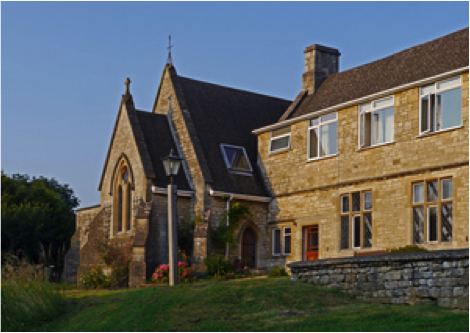
Monastery of Our Lady and St. Bernard
A 5 Day Retreat, at the Monastery of Our Lady and St. Bernard, nr Stroud, Glous. by Lesley Jones.

The COUK retreat led by Elizabeth Smith, assisted by Richard Eddleston took place in February 2018, and lasted from the Tuesday evening until the Saturday morning.

The themed retreat ‘God is Love’ was based around the teachings of Father Thomas Keating. The short series of DVDs consisted of listening to him talk on an evolving understanding of cosmology and how we are to understand this in the light of John 1. 1-. ‘In the beginning was the Word.’
The basis of his teaching is that creation has been evolving from the beginning of time and that the cosmic Christ permeates all that is, that there is a wholeness and unity that must be realised. There is a growing consensus among scientists about the evolving cosmos and this resonates with the intuitions of mystics throughout the ages. The practice of CP opens us to the reality of God, however we call him, to participate.

The Sisters

We were richly blessed by the eight retreatants who came from a wide variety of backgrounds and experience. We were split into two smaller groups of four, to discuss what we had seen, before feeding back into the whole group.

This led to some lively debate and reflections. What came over strongly was how all of us welcomed the opportunity to share views which we did not always feel able to do so freely in our home church contexts. We very much appreciated the opportunity to be with fellow travellers on the journey of faith, all who had a regular practice of Centering Prayer.

The setting of the monastery in the beautiful countryside of very rural Gloucester, was a delight to the senses, with snowdrops and primroses out everywhere. The birds were getting busier, with a pair of tawny owls hooting outside my room at night. One night the air was very clear and still, with a myriad of stars enhancing the sense of eternal mystery.

Our timetable left us plenty of time to just be, to delight in the silence, aided by the quiet efficiency and hospitality of the sisters.

We were able to walk in the grounds or go further afield around the village itself, or the surrounding countryside.

The days started with a time of Centering Prayer, followed by meals, taken in silence. More periods of CP punctuated the days, enabling us to go deeper into the contemplative silence. The retreatants were a mix of seasoned practitioners, to relative beginners, but everyone appreciated these times together. There were opportunities to attend the daily Eucharist, and/or evening vigils.

One evening we had a short talk by Richard Eddleston on the practice of the Welcoming Prayer, a practice that helps increase our awareness of when one of the emotional energy centres for happiness has been triggered and we are caught up in a spiral of afflictive emotions and thoughts. The welcoming prayer helps create a space for these effects to can be defused.

One of the participants was an experienced retreat leader, with a speciality in body work, so if we so wished we had the opportunity to follow some exercises, outside overlooking the hills. For me this enhanced my awareness of our consisting of body, mind, and spirit.

I felt at the end all aspects had been nourished. It had been a truly refreshing retreat, leaving me with much to be pondered. So many thanks to everyone who contributed to the time apart from our everyday commitments.

Daily Eucharist
The Beauty of Silence

The Beauty of Silence

I always love waking up to the first snow fall when the whole world seems silent, cushions against sound by the snow. I remember walking to Vigils early one morning (3:30am) when the snow had fallen during the night, and no-one had yet walked on it. The silence was magical, the snow sparkled in the star light and all was still and silent.

But I have come to realise that there is more than one silence. Also, that the English language is ambiguous. I may think of silence in one way, you in another.

I would like to say a few words on silence to clarify. Silence is a journey.

There is exterior silence, like the silence I experienced on my way to Vigils.

This exterior silence supports the movement into interior silence, the quietening of thoughts.

Silence flows from interior silence. It disregards the endless conversation we have with ourselves and rests in the presence of God. Silence arises in consenting to God’s presence and action within.

Stillness -This is the experience of God’s presence beyond rational concepts and preoccupations with our thoughts and desires. Stillness is motionlessness within and without. Listening to no sound or looking at no form.

Interior silence tends to move into solitude and then stillness. Stillness is the habitat of contemplative prayer. By just being human we have this capacity. So many have forgotten about this ability due to all the distractions modern society offers us.

Contemplation is the normal development of a sincere and mature Christian life of Prayer.

The difficulty is learning to be silent and still. Meister Eckhart suggested that nothing so much resembles the language of God as does silence. This is a new language and takes time and patience to learn. But it is well worth it to hear the “silent music, the sounding solitude. The supper which revives and enkindles love” St John of the Cross.

Elizabeth Smith – February 2018

Calendar 2018

JULY, Sat. 7th Introductory Day.
Whirlow Spirituality Centre
Whirlow Grange Drive
Sheffield
Contact: Email: spiritualitycentre@whirlowgrange.co.uk

August Friday 31st to Sept. Sunday 2rd 2018
On Being Human – How we really are.
Includes the Welcome Prayer.
Monastery of Our Lady and St. Bernard, Brownshill, Stroud.

One of the greatest impediments to the spiritual journey is the False-Self which is firmly in place by the age of four. This Retreat will look at how the False Self is formed and grows and the importance of dismantling it. Centering Prayer can help in this process. The Welcoming Prayer helps to dismantle the emotional programs of the false-self system and to heal the wounds of a lifetime by addressing them where they are stored – in the body.

Cost includes all meals and accommodation in single rooms £120

Introductory Days and Retreats will be announced as they are arranged. Please keep an eye on the website www.contemplativeoutreachuk, which is being refreshed at the moment.

If you would like to host an Introductory Day, please contact E.M. Smith at infocouk@btinternet.com

Consenting to God as God is Book

Book Review – Consenting to God as God is… By Thomas Keating

Consenting to God as God is Book
A book to be read by anyone who is in contemplative service especially those who are in leadership within Contemplative Outreach.

“This book is addressed primary to people with some personal experience of the spiritual journey……. The material in the book is addressed to people who have been practicing Centering Prayer for several years, who are familiar with its immediate conceptual background.” Thomas Keating.

“Consenting to God as God is is a way of describing the most fundamental exercise of Christian faith. This exercise recognizes the illusory character of our past ideas of God and gives birth to a new understanding that leads to a deep conversion of heart.” Thomas Keating

This book took some years to come to fruition after several meeting with the Spanish Council for Extension Contemplativa International which took place in Miami between the years 2007 and 2009.

The book can be challenging but worth it. As a result of these talks and discussions with Thomas Keating, Extension Contemplativa International began to look at a more contemplative form of governance, to look at a non-hierarchical governance.

When I first started the Newsletter cut and paste meant that literally! The Newsletter was a way of sending out information and formational articles due to lack of the books etc on Centering Prayer and books by Thomas Keating here in UK. Times have changed, and the Newsletter needs to change to be a community Newsletter. This can only happen with your help. If you would like to contribute to the Newsletter, tell us about your own experience, about your group, review a book or write a poem, please send your writing to infocouk@btinternet.com with the subject “Newsletter.” – Elizabeth

The Process of Forming a Centering Prayer Group

In the last newsletter, I outlined the process of setting up an introductory day. There was an emphasis throughout on the setting up of a support group post the introductory day. I will now talk about the process of setting up such a group. I have increasingly realised how being part of a support group is essential in our spiritual transformation. This is something emphasized in all spiritual teachings.

After the introductory day, I had a list of emails of people who attended, as well as those interested who could not attend. I emailed these people asking them for their preferences, where the group should meet, how often it should meet, when it should meet and how the group should run. Obviously it is impossible to meet everybody’s needs.

What emerged though were three groups meeting fortnightly. Fortnightly suited me as three groups a week would have been too much for me. Monthly and there is a tendency to lose continuity, especially if someone misses a meeting. One was in Nottingham, and two in a suburb of Nottingham where I live, where the introductory day was held, and where many people lived. Two were in the afternoon, one in the evening. The evening one clearly suited those still working, whereas retired people tend to have a preference for daytime meetings, and the majority of those attending were older. My commitment was to stay with the groups for as long as they wanted to continue meeting. They are still all running.

The next question was the length of each session. I know of groups where they meet for centering prayer, then depart; over in half-an-hour. Other groups have a reading or two, some sharing, and last less than an hour. My and the group’s preference was for a meeting of 90 minutes. We start with a period of CP. We then have cd/dvd in-put, though one group now prefers this in written form. We then have a time for discussion, sharing and questions. Normally there is far too much that people want to say and share for the time available. The most common response is that they have never had the chance to explore such matters anywhere else. It is not a therapeutic group, though inevitably people will share things from their own lives.

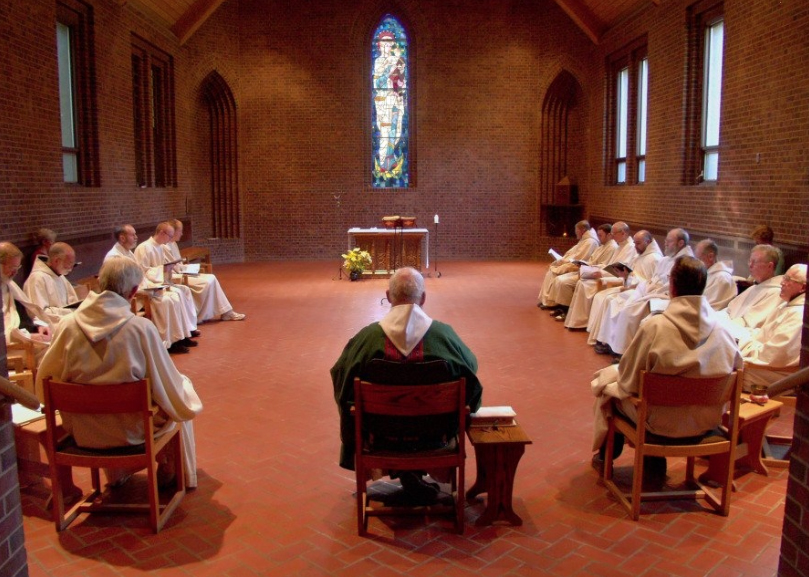
Monks at prayers

I hope I am conveying the sense that there are no rights and wrongs for groups. Each group will be different. Its needs will be different. The members of it come from different backgrounds and they will be at different stages of their spiritual journey. But that is what contributes to making the groups so exciting and vibrant. The people in the groups I run come from different denominations as well as those not affiliated to any church. This could be seen as problematic, but the emphasis is on respect and sharing personal spiritual experiences, not particular beliefs.

I was aware of the danger of following CP with discussion. Inevitably this process moves people out of their hearts and into their minds or ego’s. However, as long as everyone remembers that ultimately, we never can express that Divine Mystery in words or thoughts, there is no problem. Whilst a deepening understanding of what is happening and the processes involved can be very beneficial in the process of transformation.

In terms of the material used, this is a vast subject. We started with the follow up material from Thomas Keating. These can be borrowed from COUK, or can be downloaded online in audio form at a reasonable cost. The material used will depend on the group and the people in it. My groups have wanted more than just Thomas Keating. This has led us to use Laurence Freeman, John Main, Richard Rohr, Cynthia Bourgeault, Eckhart Tolle and others, as well as continuing with Thomas Keating. They all give slightly different perspectives on the same issues, which has been found to be very helpful. Some people find one person more helpful, some another person.
Ten Day Intensive Retreat

I can truly say that being part of these groups has been an amazing privilege, one that has greatly helped to transform my spiritual life. I cannot rate them too highly. I would also encourage everybody to try and set up a group. You don’t have to be an expert. You don’t have to be super spiritual. You don’t have to know more than everyone else. Just your gift of setting up the space and time is enough.

I have barely touched on all the issues to do with groups here. I am though more than happy to communicate in greater depth with anyone interested.

Richard Eddleston 22-02-2018

Setting up an Introductory Day on Centering Prayer

Having read of the importance of being part of a Centering Prayer group, I looked for one near me in Nottingham. There was none, I decided the way forward was to start one myself. .I contacted Elizabeth Smith, director of Centering Prayer UK (COUK) and sorted out possible dates with her for an Introductory Day to Centering Prayer.

I sorted out a venue local to where I live in a suburb of Nottingham. I needed a room that could take about 50 people. I had no idea how many might come along. It also needed to have access to tea/coffee making facilities. Parking would be good and easy access for anyone disabled. I came up with a room in a local Church, which I had used before. It was also not too expensive. It certainly required a sense that this was what God was wanting me to do.

We agreed on a Saturday. This was some months in advance as I wanted plenty of time to plan and prepare. I decided that it was best for people to bring their own lunches. It is a nice idea providing lunch, but it creates an awful lot more work and puts up the cost. I worked out a cost based on 20 people attending, the costs for Elizabeth coming, and the cost of hiring the room for the day. The introductory course is normally 10.00/10.30 am – 3.30/4.00 pm.

Then there was the advertising to sort out. I devised a poster and sent it round lots of churches, asking if they could put it in the church notices. Having personal contacts is always a great blessing. In fact, the majority of people who eventually came already knew me in one way or another.

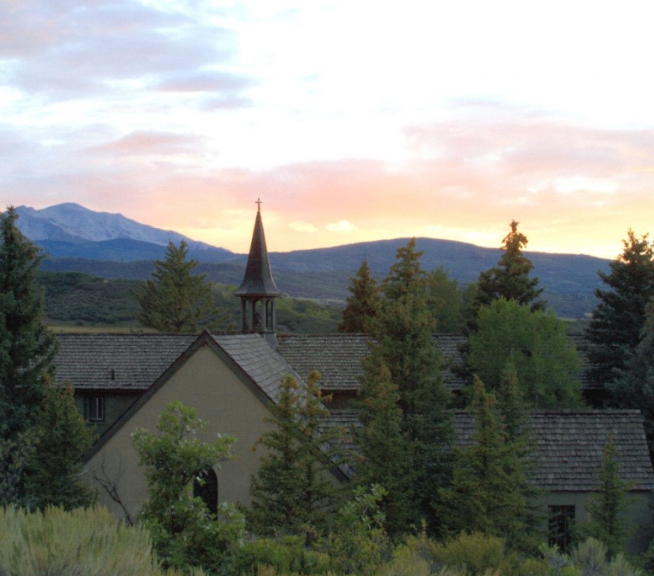
Snowmass Meditation Hall

I got an article about it in the local newspaper. Local newspapers are normally keen to get local news items. I put posters up in local shops and the post office. Some you have to pay for. Supermarkets normally have a community board and will put it up for free.

I probably circulated the local churches with six weeks to go, then again with three weeks to go. All this is very cheap and easy when you do it on the internet. The more places people might see a poster, the better. There is a rule about people needing to see something three times before they act.

I devised a simple form for people to fill in when they contacted me. From that, I created an email list of people wanting to attend. It was important all along, from the poster onwards, to create the idea that there would be follow-up sessions for those interested. The email list is key in this. With an email list, I could send out reminders to participants closer to the day.

I got a couple of those participating to help out with the teas and coffees. This left me free to welcome participants on the day and to settle them in. Also, to sort out any needs that Elizabeth might have, though we had agreed in advance what she might need. The day went very smoothly and was not really a great deal of work at all. Thirty people came, which was ideal.

They were a mixed bunch. They came from a variety of denominational backgrounds, plus those who had no affiliation with any church group. The moral of this is to work hard on people you know and ask people to spread the word. Go along to any church where you have contacts and talk to them about Centering Prayer and what the course involves.

Seeing you in person begins to break down any barriers and misconceptions about what Centering Prayer may involve. I will look at the process of setting up groups following on from an introductory day, and how these might function in my next article.
By Richard Eddleston 6-7-17 riedd@btinternet.com

In the silence which is active, the Inner Light begins to glow – a tiny spark. For the flame to be kindled and grow, subtle argument and the clamour of our emotions must be stilled. It is by attention full of love that we enable the Inner Light to blaze and illuminate our dwelling and to make our whole being a source from which this Light may shine out. Quaker Faith and Practice 2.12 – Pierre Lacout 1969.

Setting up an Introductory Day on Centering Prayer

Richard Eddleston

Having read of the importance of being part of a Centering Prayer group, I looked for one near me in Nottingham. There was none, I decided the way forward was to start one myself. .I contacted Elizabeth Smith, director of Centering Prayer UK (COUK) and sorted out possible dates with her for an Introductory Day to Centering Prayer. I sorted out a venue local to where I live in a suburb of Nottingham. I needed a room that could take about 50 people. I had no idea how many might come along. It also needed to have access to tea/coffee making facilities. Parking would be good and easy access for anyone disabled. I came up with a room in a local Church, which I had used before. It was also not too expensive. It certainly required a sense that this was what God was wanting me to do.

We agreed on a Saturday. This was some months in advance as I wanted plenty of time to plan and prepare. I decided that it was best for people to bring their own lunches. It is a nice idea providing lunch, but it creates an awful lot more work and puts up the cost. I worked out a cost based on 20 people attending, the costs for Elizabeth coming, and the cost of hiring the room for the day. The introductory course is normally 10.00/10.30 am – 3.30/4.00 pm. Then there was the advertising to sort out. I devised a poster and sent it round lots of churches, asking if they could put it in the church notices. Having personal contacts is always a great blessing. In fact, the majority of people who eventually came already knew me in one way or another.

I got an article about it in the local newspaper. Local newspapers are normally keen to get local news items. I put posters up in local shops and the post office. Some you have to pay for. Supermarkets normally have a community board and will put it up for free. I probably circulated the local churches with six weeks to go, then again with three weeks to go. All this is very cheap and easy when you do it on the internet. The more places people might see a poster, the better. There is a rule about people needing to see something three times before they act.

I devised a simple form for people to fill in when they contacted me. From that, I created an email list of people wanting to attend. It was important all along, from the poster onwards, to create the idea that there would be follow-up sessions for those interested. The email list is key in this. With an email list, I could send out reminders to participants closer to the day.

I got a couple of those participating to help out with the teas and coffees. This left me free to welcome participants on the day and to settle them in. Also, to sort out any needs that Elizabeth might have, though we had agreed in advance what she might need. The day went very smoothly and was not really a great deal of work at all. Thirty people came, which was ideal. They were a mixed bunch. They came from a variety of denominational backgrounds, plus those who had no affiliation with any church group. The moral of this is to work hard on people you know and ask people to spread the word. Go along to any church where you have contacts and talk to them about Centering Prayer and what the course involves. Seeing you in person begins to break down any barriers and misconceptions about what Centering Prayer may involve. I will look at the process of setting up groups following on from an introductory day, and how these might function in my next article.
By Richard Eddleston

Setting up an Introductory Day on Centering Prayer

Shetland

Here in the far north, we have had an Introductory Day on one of our outer islands, and there were 14 of us altogether. I stuck to the script and what we were taught and it went very well. We made a weekend of it, for those who have been doing CP for some time. On Sunday we went through some of the basics about ‘The Human Condition’ that we did on the 10 Day Intensive, and how it relates to the Welcoming Practice, We all learned a lot more from that. We then had a contemplative service in the local Kirk. We had a varied group from the Church of Scotland, Anglican, Episcopalian, Baptist, Methodist, Pentecostal, Roman Catholic, and Celtic Christian community churches. We even had a Buddhist who wanted to join us at the Kirk service. I think God is doing something wonderful using Centering Prayer.

Six New Presenters

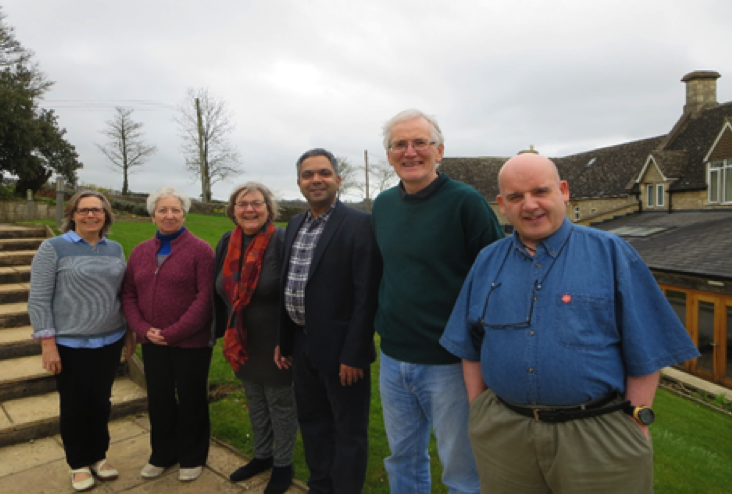
From left to right: Margaret Bowers ( Market Harborough), Rev. Lesley Jones (Luton), Hilde Bardell (Shetland) Sieijish Dominic (Slough), Richard Eddleston (Nottingham) Brian Ward (Salvation Army)

New Presenters

The Heartfulness Retreat held at Stroud this June was a great success as can be seen from the comments.

Heartfulness Retreat

“The Heartfulness Retreat was wonderful. Father Thomas’ teaching is inspirational with new insights, the Monastery at Brownshill is so tranquil, the surrounding landscapes beautiful. The intensive Centering Prayer programme allowed a fruitful immersion that left me feeling reinvigorated. Spending time in silent fellowship with a dozen others became an act of divine communion.” M.T.

“Thank you for the few days spent in the Monastery of St. Bernard. They were very significant for me in my inner journey. ……. felt I needed to hear the stories of others and to reflect on the DVDs. There was also considerable time for silence. The mixture is what I sought and found.” M.B.

“…thank you for the Heartfulness Retreat which I found very powerful and has given me a much deeper appreciation of both the theory and practice of Centering Prayer. And it was really helpful to be part of such a thoughtful and interesting group of people and to share silence with them.” M.W.

Dates for your Diary. 2017

August Sat. 12th: Introductory Day. Penzance
Contact: Michael Berris – mike.berris49@gmail.com

October Sat.7th Oct: A Lectio Divina Day, Lincoln
Contact; Fr Stephen Hoy- Tel; 01522-525621
e-mail: fr.stephen@stjohnthebaptistparishchurch.org.uk

October Sat 14th: Introductory Day, Brighton
Contact; Barbara – griggsbb@gmail.com

October Fri 20th to 22nd: Introductory Weekend
Ilkley, Yorkshire. Full Cost £135
Dep.£25 payable to “Contemplative Outreach UK”
send to; 10 Hawthorne Ave, Higher Walton, Preston, PR5 4EE.

Dates for 2018 will be available soon on the website www.contemplativeoutreachuk.com. Look out for a Nine Day Intensive, A New Five Day “God is love” and a Centering Prayer Weekend. Plus, Introductory Days.

Centering Prayer throws light on a new perspective of everything, to a new understanding of ourselves and all creation. It leads to a deep conversion of the heart.

Centering Prayer is the path to a radical new way of seeing the world. It is not, as is sometimes thought, simply an act of devotional piety, nor is it a Christianized form of other meditation methods. Bourgeault cuts through the misconceptions to show that Centering Prayer is in fact a pioneering development within the Christian contemplative tradition. She provides a complete course in the practice and then goes deeper to analyse what actually happens in Centering Prayer: the mind effectively switches to a new operating system that makes possible the perception of nonduality.

With this understanding in place, she takes us on a journey through one of the sources of the practice, the Christian contemplative classic The Cloud of Unknowing, revealing it to be among the earliest Christian explorations of the phenomenology of consciousness.

The Heart of Centering PrayerBourgeault’s illumination of the Centering Prayer path provides compelling evidence of how important the practice has become in the half-century since it first arose among American Trappist monks, and of its maturation and refinement over the ensuing years of sincere study and practice.

“A masterpiece of spiritual wisdom firmly rooted in the Christian mystical tradition. A brilliant analysis of nondual Christianity in theory and in practice and a major contribution to the Centering Prayer movement and to interspiritual dialogue.” – Thomas Keating, author of Open Mind, Open Heart

The Method of Centering Prayer. Part 2

This is a very ancient prayer, so old that many Christians seem not to know of its existence in the Christian Contemplative Tradition. It is only in recent times that it has seen a revival. Centering Prayer, is a new name for an old prayer and based on the inspired work of the unknown author of the 14th century spiritual classic on prayer called “the Cloud of Unknowing”.

The Method of Centering Prayer
This prayer builds on all our other ways of prayer helping us to develop a mature prayer life. Centering Prayer does not deny or do away with other forms of prayer such as vocal prayer, reflective prayer and responsive prayer. Rather these other forms of prayer are the foundations of Centering Prayer as is reading Scripture. Centering Prayer can cast a fresh light on these other forms of prayer and deepen them.

Prayer is more than just thoughts or feelings expressed in words. Prayer can exist without the need of words. It goes beyond conversation to communion, which is a very powerful prayer in which the Spirit guides. It is a prayer which, if we consent, opens our hearts and minds to God’s divine grace and contemplative prayer.

The Centering Prayer is very simple but also a very nuanced powerful form of prayer. Our intention is the heart and soul of the Centering Prayer practise. It is unique in its approach from other forms of meditation.

There are four guidelines for this method and it is advised to keep to these guidelines at the beginning and not to mix them with any other method or you will have a spiritual smorgasbord. This will lead nowhere.

The Heart of Centering Prayer

Guidelines:

1.Choose a sacred word as the symbol of your intention to consent to God’s presence and action within.
We choose a sacred word of one syllable, as suggested by the author of “The Cloud of Unknowing”, such as “Love” or “God”.

The sacred word is not sacred because of its literal meaning but because of the meaning we give it as the expression of our intent to consent to God’s presence and action within.

Other sacred words could be “peace”, “joy”, “yes” or choose one you prefer. As long as it is short.

Having chosen a sacred word, we do not change it during the time of prayer as this would be to start thinking. It is best to keep the same word for this prayer so that it sinks into the psych and becomes so easy to remember that in time it says itself.

2. Sitting comfortably and with eyes closed, settle briefly and silently introduce the sacred word as the symbol of your intention to consent to God’s presence and action within.
Sitting comfortably means relatively comfy so that we don’t fall asleep!

Whatever position we choose we keep our back straight and supported and our feet on the ground. Do not cross your legs or arms as this may impede the blood flow to the limbs.

3. When you become aware you are engaged with “thoughts” return ever so gently to the sacred word.
If we become aware of thoughts during the time of prayer, we simply return ever so gently to our sacred word.

“Thoughts” in this method is an umbrella term which means any perception that goes across our stream of consciousness. These could be body sensations, sense perceptions, feelings, images, reflections, commentaries and even spiritual experiences. Just for this time of prayer we let them all go and return ever so gently to the sacred word. We do not get cross at having thoughts as this would be to start thinking. Thoughts are inevitable, integral and a normal part of Centering Prayer. What we are doing is letting them go not becoming attached to them.

The sacred word serves to cancel all other thoughts and distractions by its meaningless repetition, giving no thought to the literal meaning of the sacred word. A word without an emotional charge is also important. The sacred word is not a mantra keep repeating, though it may feel like this at the beginning.

During the time of prayer, the sacred word may become vague or even disappear and we are left with just our intention.

4. At the end of the prayer time, about 20 to 30 minutes, we remain in silence with eyes closed for a couple of minutes.
This is to enable our psyche to become use to our normal awareness again and to let the atmosphere of silence into our daily life.

If we are doing this prayer on our own, we can use a timer as long as it is not too loud or sharp. Or we can make a CD with quiet music or a short scripture reading to start the 20 or 30 minutes silence ending with some soft music.

If you are in a group, the prayer leader does the timing starting with a short prayer or short scripture reading and ending with a prayer such as the Lord’s Prayer said very slowly.

INTRODUCTORY DAYS

facilitated by Elizabeth Smith

Date: Sat 8th April – St. Luke’s. Leagrave, Luton
Contact: Lesley Jones
E-mail: lesleyjones3167@icloud.com

Date: Sat 13 May – St. John’s, Burcsough, Lancs
Contact: Janice Richards and Sue Hodgkins
Tel: 01704 621 598 | 07590 066 607
E-mail: janrichards653@yahoo.co.uk | suehodgkins@hotmail.com

Date: Sat.15th July, Liverpool – St. Dunstan’s Parish Centre
Contact: Mark Waters
Tel: 07795 822 193
E-mail: marko.waters@gmail.com

CONTEMPLATIVE OUTREACH UK RETREATS AND WORKSHOPS 2017

This replaces all other dates and prices

Introductory Weekend to Centering Prayer
Date: February 10th to 12th 2017
Venue: Our Lady & St. Bernard’s Monastery, Stroud, GloucesterInfo: Come along and deepen your prayer life. For beginners and anyone who wishes to revise their practice or just a quiet weekend in beautiful, peaceful surroundings.
Cost: £110

Presenter Training
Date: March 14th to 19th 2017
Venue: Our Lady & St. Bernard’s Monastery, Stroud, Gloucester
Info: For more information, Contact infocouk@btinternet.com
Cost: £355 – cost includes accommodation, tutoring and Presenter’s handbook. – Only one place available

Heartfulness Retreat
Date: May 31st to June 5th 2017
Venue: Our Lady & St. Bernard’s Monastery, Stroud, Gloucester.
Info: For those who have been practising Centering Prayer for some time. The participants are guided by means of Thomas Keating DVDs towards an understanding of the contemplative dimension of the Gospel and its extraordinary implications and applications for personal freedom and global peace.
Cost: £316 – book early to avoid disappointment

Introductory Weekend to Centering Prayer
Date: October 20th to 22th 2017
Venue: The Briery, Ilkley, West Yorkshire
Info:Come along and deepen your prayer life. For beginners and anyone who wishes to revise their practice or just a quiet weekend in beautiful peaceful surroundings.
Cost: £135

Introductory Days will be announced as they are arranged. Please check here for more details.

If you would like to hold an Introductory Day, please contact E.M. Smith at infocouk@btinternet.com

Bluebell
Denver

The Contemplative Outreach Ltd. International Conference

DenverDate: September 21 – 24, 2017
Venue: Marriott Hotel, Gateway Park, Denver International Airport, Denver, Colorado, USA

Registrations will open mid-May 2017; more details will be available at that time.

To help you plan for this very important gathering of the active community of Contemplative Outreach, the conference will begin at 4 PM on Thursday,21 September and concludes by noon on Sunday, 24 September. The hotel is located 10 miles from the Denver International Airport and offers complimentary shuttle to and from the airport. Hotel registrations with our discounted room rate will be available when we open conference registration.

This conference will provide an opportunity for listening, open discussion and planning for the future as we continue to experience a time of transition for Contemplative Outreach.

We are excited about this conference and hope you can join us in Denver next September.

Please refer all questions to Marie Howard, Conference Coordinator at MRHfamlife@aol.com or by calling 973 838 3384, x5.

The Virgin Eye: Towards a Contemplative View of Life

The Virgin Eye Robin Daniels. Edited by Katherine Daniels. Instant Apostle, Great Britain, 2016. Pages 416. £9.99.

Robin Daniels worked in private practice for 30 years as a Jungian analyst. He was supervisor for St Marylebone Healing Centre and facilitated a reflecting team of hospital chaplains. He ran marriage enrichment and bereavement groups for churches. This book weaves insights from depth psychology and literature with those of his Christian faith.

Sr. Wendy Beckett
“I started to read then paused while I fetched my Bible; then a pen to underline wisdom. Then I prayed. Then I started to tell someone else all about it. It is like having an amazingly wise old uncle showing you how to live; to truly be alive. I wish it had been available years ago.”

Extracts from a review by Fr. Vincent O’Hara, ODC.
Reprinted by courtesy of Fr. O’Hara.

“The author is a great observer, and his vision is filtered through a sympathetic eye, with tangible compassion for the human condition, but always aware of the “immortal diamond” that is each individual person. A quote from Matthew Arnold on the flyleaf points to one of the aims of the book: A longing to inquire into the mystery of this heart which beats So wild, so deep in.

The book covers a vast canvas, beginning with a masterly assessment of contemporary challenges, which include the pace of change and the concomitant stress, and it then presents a vision for wholesome living, under three broad headings: God, Self and Others. One of the beauties of the publication is that all these are knit together in a cohesive way under the expert pen of the author and the sensitive arrangement of the editor.

…the publication is a highly-charged blend of psychology and spirituality, drawing on the author’s wide practice in the former and his obvious living of the later.”

The Virgin Eye

“Thinking, which is the radical gift of rational consciousness, is of its nature controlling and inventing. It is limited in its capacities and bound by five senses and the thinking process. Putting this managing and controlling mind into the heart is a basic practice to awaken the divine presence within us.” – Thomas Keating, Contemplative Outreach Ltd. News, Dec.2014

What is Centering Prayer. Part 1

Door in to brick buildingCentering Prayer is a modern term for a very ancient prayer. It could be called Prayer in Secret (Mt.6, 6). This teaching of Jesus on prayer has roots in the Old Testament. Elijah’s experience of Yahweh on Mount Horeb is said to be the “sound of sheer silence”, (I Kings 19, 12, the New Revised Standard Version). Then there is the famous phrase from Psalm 46, “be still and know I am God”

In centuries past ways of cultivating contemplative prayer have been called Prayer of the Heart, Pure Prayer, Prayer of Faith, Prayer of Simple Regard, Prayer of Simplicity, Active Quiet and Acquired Contemplation. This form of prayer was practiced by the Desert Fathers and Mothers of Egypt, Palestine and Syria, people like Evagrius and John Cassian to name but two.

Door in to brick building

In the Middle Ages we have well-known names such as St. Bernard of Clairvaux and Guido the Carthusian, the Rhineland mystics such as St Hildegard, Meister Eckhart and Ruysbroek. In later times there is the English mystic of the 14th Century and author of “The Cloud of Unknowing” to which the method of Centering Prayer owes much. After the Reformation we have the mystics like St. Teresa of Avila and St John of the Cross in Spain and St Francis de Sales and St. Jane De Chantel in France. Nearer to our own times we have the Benedictines, Dom Augustine Baker and Dom John Chapman and of course in the 20th Century the Trappist monk, Thomas Merton.

It is nothing new to rename an ancient practice to make it more appealing to a modern audience. Centering Prayer is an another attempt to present the teaching of earlier times in a modern way to make it suitable for ordinary people who wish to deepen their life of prayer and to have a support system to sustain it. It is a way of prayer which moves away from the ordinary psychological awareness to the interior silence of the spiritual level of our being and beyond. It can in time move in to the secrecy of union with the Ultimate Mystery within us.

Centering Prayer is a method for refining our faculties so that we can enter more easily into this interior silence which is contemplative prayer. Contemplative Prayer is both a gift and a mystery. It takes us to the very threshold so to speak where the door is always open. It does this by withdrawing our attention from the ordinary flow of thoughts, with which we tend to identify with most of the time. (Open Mind, Open Heart. p34).

Practicing Centering Prayer opens us to the spiritual level of our deepest being. It is also a way of letting go of our own agendas, preconceptions, misconceptions, prejudices, ideas, opinions and beliefs, so that we can become a channel for God’s grace. It is a practice to facilitate our desire to be totally open to God, the Ultimate Reality.

The method of Centering Prayer owes much to a classic book on prayer called “The Cloud of Unknowing”, written in the 14th century by an anonymous English writer, who is said to have come from the Midlands of England and be either a monk or priest. To find the method of Centering Prayer within “The Cloud of Unknowing” you do have to read the whole book for it is spread out within the book and not in an orderly fashion. However, it is an exercise well worth doing. Centering Prayer does not come out of a vacuum but it has put the method suggested by the author of “The Cloud of Unknowing” into a clear and ordered fashion. Centering Prayer is a way of prayer which follows most closely the method found in the “The Cloud of Unknowing” than any other method. Centering Prayer is totally Christian.

All Christian prayer is based on the Word of God in Scripture, and the person of Jesus Christ. Prayer is more than a shopping list we present to God. It is more a communion with God, a way to cultivate a relationship with God. Prayer is a relationship with God and this relationship can be expressed without words or thoughts, or feelings, by a simple silent intention to consent to God’s presence and action. The most traditional way of developing this relationship with God is Lectio Divina, the prayerful pondering on the Word of God in Scripture. It is important to situate Centering Prayer in the monastic tradition of Lectio Divina.

Lectio Divina was a natural way of prayer for everyone for the first twelve centuries. It consisted firstly in the prayerful listening to or reading of Scripture. This could be done in various ways, including gazing at stained glass windows which told the Scriptural story. In this way prayer was not confined to those few who could read. Naturally this led on to thinking about the words heard or read, then responding spontaneously with acts of sorry, hope, love and faith and finally resting in the Word, simply being in the silence.

Guigo the Carthusian in the 12th Century named the four moments or stages of Lectio Divina. The first part he called Lectio (reading/listening), then came Meditation (discursive meditation or reflecting) which lead into Oratio (responding) and the final stage Contemplation (contemplation/resting). The first three stages were the active preparation for contemplation and might all take place in the same period of prayer. These stages are interwoven. Contemplative Prayer is not a practice to make the mind a blank but to move beyond thoughts and the multiplication of various acts to the level of communing with God within, without words, thoughts or feelings. Lectio Divina is a very rich way of prayer which takes us from the early stages of prayer to the deeper stages required for a mature Christian life.

The last moment or stage of Lectio Divina was cut off from most people for historical reasons which are beyond the scope of this article. Centering Prayer was a way to help those who pray move from the third moment, oratio, to the fourth moment, contemplation. Centering Prayer is simply offered to those who feel called to a deeper way of prayer and who are looking for a way that will help them in the context of very active lives in the world. Centering Prayer did not come out of a vacuum and was always meant to be an aid in the development of a mature Christian prayer based on the Scriptures and the person of Jesus Christ.

Purple Swirl

It should also be noticed that in this tradition of Lectio Divina, meditation refers to discursive meditation, a reflecting or thinking on the words of Scripture. The term meditation is now loosely used and has even been inter changed with the term contemplation. This is causing much confusion in some people.

Meditation has many forms and a variety of uses. The popular idea is that it is a way to relax, to relieve the stress of everyday life. This is not prayer. However, unconsciously this seems to be the idea of many who approach Centering Prayer. It is partly due to the popular idea of “meditation” which conditions many people in to having preconceived ideas on this subject.

Centering Prayer does not replace or exclude any other form of prayer but it is a specific method and it is not the same as or interchangeable with any other modern method of prayer. This is not to say there is anything wrong with any other method. I simply want to stress that Centering Prayer is different. Each person must find the way of prayer that suits them. We pray as we can, not as we would wish. It is important to find a way that will help us do that. Each method has its own dynamic and this needs to be respected.

Centering Prayer has its own dynamic which has to be understood and followed for its fruits to be fully realised and experienced. Centering Prayer is not a way of escaping from the realities of the world but rather becoming aware with greater empathy and meeting the world with extra ordinary love. It is not selfish navel gazing. If our intention is to consent to God’ presence and action within it becomes a true channel of interior transformation and thus benefits all of creation.

Free App

The free Contemplative Outreach app for Centering Prayer is available for iPhones, iPad and Android phones. This app supports one’s daily prayer commitment. Beautiful and peaceful with an adjustable timer, opening and closing prayer options. Brief instructions for learning Centering Prayer are also included.

You can find the app in iTunes App Store or Google Play Store if you have an Android, search for Centering Prayer, select the one by Contemplative Outreach.

New Book by Thomas Keating

1. Consenting to God as God is.
This collects the intimate talks and daily presentations given by Thomas Keating to members of “Extension Conteplativa International” – the Spanish and Portuguese branch of Contemplative Outreach – on various aspects of the spiritual journey.

2. Reflections on the Unknowable
This is a distillation of over seventy years as a monastic and more than three decades of writing on Centering Prayer is Thomas Keating’s latest volume on how we might develop our intimacy with God and our experiences on the Christian Contemplative Tradition. The first part of the book is a lengthy interview with Thomas Keating in which he examines concepts of the divine available to individuals willing to open the door to God. The second section consists of 31 brief homilies with a wide range of diverse topics.

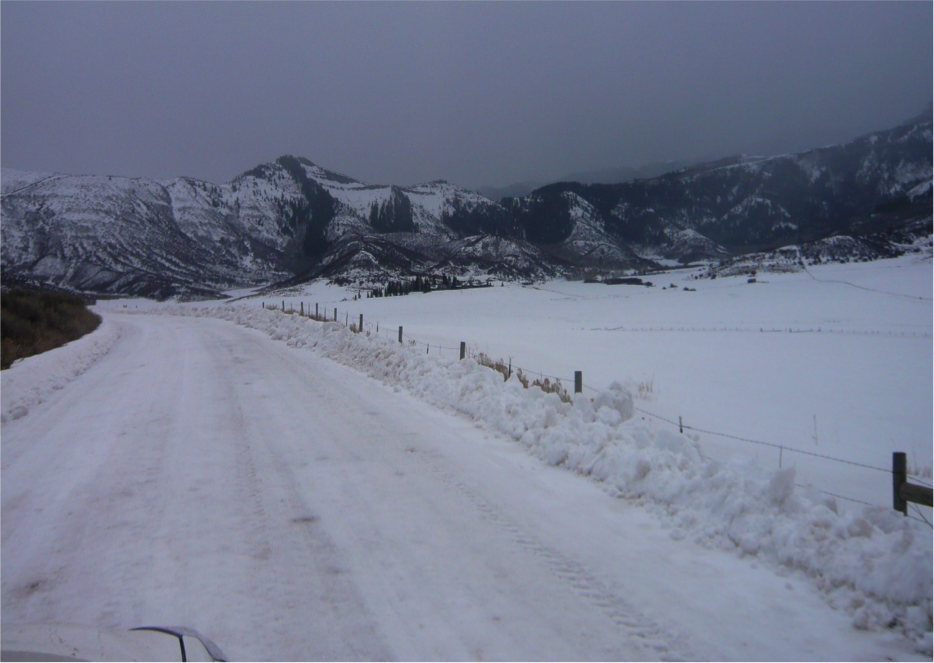
Snow on Mountains

Vision “Be still and know that I am God” – Psalm 46:10

The intent of Contemplative Outreach is to foster the process of transformation in Christ in one another though the practice of Centring Prayer.

What is Contemplative Outreach?

Contemplative Outreach was founded by Fr. Thomas Keating specifically to support those who are practicing Centering Prayer as he envisaged it. To this intention he set about creating a systematic teaching which would make accessible to modern people the rich and long tradition of the Christian Contemplative teachings.

There has always been a long tradition of various types of prayer groups. However, few groups, if any, have had the advantage of a systematic spiritual education. Many depended on the wisdom and learning of the leader. This has also applied to many of the different prayer movements of the past centuries. In depth, guided study especially of the Western Christian tradition was in the past fairly rare and open to only a few.

Fr Thomas Keating saw a need to meet the growing interest in contemplation among lay people and religious. The latter also suffered from a truncated education as far as contemplative spirituality was concerned. This situation came about for various historical reasons beyond the scope of this article to cover. Thomas Merton is perhaps one of the more famous instigators of the contemplative renewal.

I became very interested in the teachings of Fr. Thomas Keating because he did seem to be someone who was presenting a very solid basis for a renewal of the contemplative spirit in the Church based on a sound Christian theology and spirituality. I have spent the past twenty-seven years practicing Centering Prayer, studying and training with Fr Thomas. This has involved trips to the USA once or twice a year.

Over the course of these years, Fr Thomas has become my mentor and I stay in regular contact with him.

The main purpose of Contemplative Outreach is to teach the practice of Centering Prayer, but at the same time to pass on the Western Christian Tradition in the hope that it will educate Christians in their own tradition and encourage them to study some of the sources of this tradition, e.g. The Cloud of Unknowing, St John of the Cross, St Teresa of Avila, and St Francis de Sales, to name but a few. (**cf. Fr Thomas Keating’ article, A Traditional Blend in the Contemplative Outreach Newsletter June 2000 Vol.14 Number2). An important element of this tradition encourages the follower to find a wise mentor.

Centering Prayer has its scriptural inspiration from Matt.6 v 6. It also comes out of the Christian Contemplative Heritage, inspired in the first instance by the Desert Mothers and Fathers and the Hesychastic tradition, both of which cultivate interior silence and purity of heart. Centering Prayer is a passage from concentrative practices to an alert receptivity through consenting to God’s presence and action within, which places the emphasis on purity of intention.

Centering Prayer is now increasing in popularity and many are trying to interpret the method and Fr Thomas’s teaching for themselves, but it is best taught by a trained Presenter.

Fr Keating’s intention was to develop courses and retreats to train people in his teaching and this is an ongoing process. Centering Prayer, as taught by Fr. Keating, is a subtle method beginning a process that is different from other methods of meditation which are popular at the moment and would at first glance appear to be similar.

Centering Prayer is a specific method and it has its own dynamic and it has to be done according to that dynamic for its fruits to be fully realised and experienced

Fr Thomas Keating , Spiritual Journey. Part One

It often takes about three years of a regular faithful practice for people to become aware of some of the subtleties. (**cf. Fr Keating’s article, Resting in God’s Presence. Contemplative Outreach Newsletter, Spring 1998 Vol.12 Number 1.)

As you can see, this can be a slow process and requires commitment not only to the practice, but in attending the courses and retreats designed by Fr Keating to lead the practitioner into greater depths of understanding and practice.

The system he devised is as follows:

  • An Introductory Day over a day or weekend followed by six weeks of study of the extended introductory materials.
  • After the Introductory Day, one is encouraged to attend a Lectio Divina Day or Weekend
  • People are also encouraged to attend a Ten Day Intensive Retreat within their first year or two of practice. This helps firmly establish the practice and is a real help in understanding the teaching materials.

Following on from these there are a number of retreats which follow in sequence:

  • The Post-Intensive Retreat. This is primarily a silent retreat with longer periods of Centering Prayer.
  • An Advanced Retreat. This can be of various lengths.
  • Heartfulness Retreat. This is the latest retreat and is aimed at those who have been practising for eight to ten years.

As those who have attended these Retreats can attest, they hear the materials in an atmosphere of silence and solitude in a very different way to those who only hear the materials in the everyday environment of daily life. We recognise that this can be a problem to many who cannot afford the time or finances to follow this recommended structure. Contemplative Outreach is looking at ways to broaden this approach, but the experience of the regular Ten Day Intensive Retreat cannot easily be reproduced in shorter sections, though the teaching containing the background material of Centering Prayer could be. The regular Ten Day Intensive is very important for those who wish to become staff members of Contemplative Outreach.

There are also training courses for those who wish to share the method:

  • Facilitator Training
  • Presenter Training for those wishing to give the Introductory Day.
  • Leadership training, aimed at those who wish to become coordinators.
  • Practices to bring the Fruits of Centering Prayer into daily life, especially the Welcoming Prayer.

As can be seen the above is a huge programme which takes training, study and time to implement. It also requires a certain level of maturity both emotionally and spiritually. This is helped by the practice of Centering Prayer plus the deliberate practice of dismantling the False Self system as outlined in the teachings of Fr Keating.

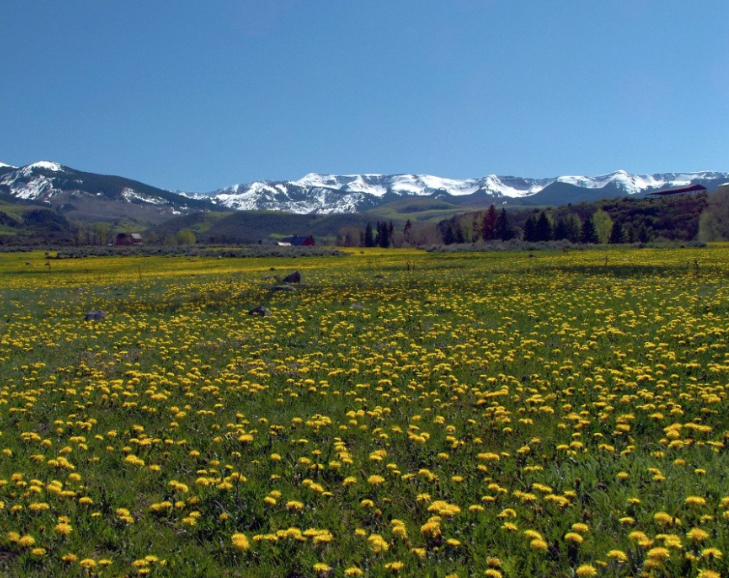
Grass fileds and mountains

There are also the various enrichment programmes which can run alongside the core materials of the curriculum:

  • The United in Prayer Day with groups around the world. This is a yearly event which normally takes place in March. The materials, usually a DVD with Fr Keating and sometimes a guest speaker, e.g. Richard Rohr, can be viewed again and again as is true of all Fr Keating’s materials.
  • Quiet Days or half days of prolonged Centering Prayer periods with possible discussion of difficulties or sharing of experiences of the benefits of Centering Prayer.
  • Centering Prayer Weekends covering a particular topic from Fr Keating’s teachings, e.g. The False Self, The Human Condition, The Welcoming Practice, or other practices for daily life.
  • Centering Prayer Intensive Retreats. Short retreats of four or five days or a weekend, again aimed at a particular section of Fr. Keating’s teachings.

While we recognise the good in other methods and insights they bring to the spiritual journey, Contemplative Outreach has its own focus, which has been briefly described above.

We affirm our solidarity with the contemplative dimension of other religions and sacred tradition. Theological Principles of Contemplative Outreach.

Of course there is always room for improvement. However it would seem wise to run these new ideas past either Fr. Keating himself or the body he has appointed before they are introduced or integrated into the original teaching. This would be in keeping with the long Christian Tradition of referring to a wise teacher or group.

Contemplative Outreach is always designing new programmes and courses to support those who practise Centering Prayer. These are always done in consultation with Fr. Keating and by a group of teachers he himself has appointed. It is the purpose of Contemplative Outreach to maintain the integrity and purity of his teaching, which is embodied in the Western Christian Tradition.

It is unfortunate that in this want it now  society, people are always looking for an instant fix even in spirituality. There is no quick fix. It takes time and dedication or as St Teresa of Avila says, a determined determination. Anything worth doing well always requires effort and commitment. The spiritual journey is the one thing that is worth following not only for ourselves but for the benefit for all humanity and this beautiful universe of ours.

The Ten Day Intensive Retreat, Poor Clare Convent, Arundel

West Sussex, June 2015

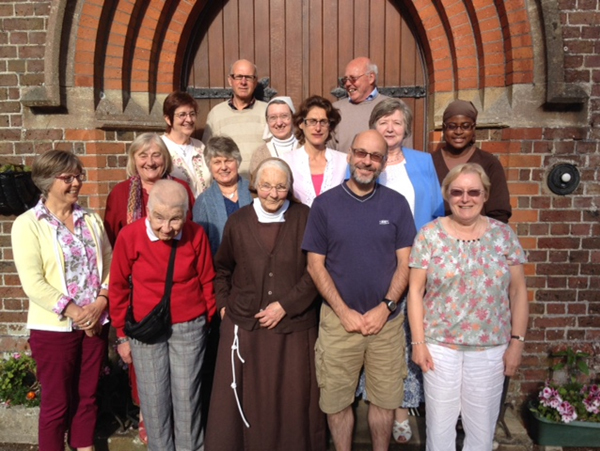
A very successful Ten Day Intensive was facilitated by Elizabeth Smith this June 2015 in the lovely surrounds of the Poor Clare Convent, Crossbush, Arundel. It was a very interdenominational group that came together consisting of religious and laity, from professional people to housewives, from those still working to those retired. For some it was their first experience of a Ten Day Intensive, for others it was a welcome return and time of renewal.

The silence was almost tangible remarked one retreatant.

A very experiential learning process was the comment from another.

All the participants found doing Centering Prayer together in a group supportive and strengthening. On the last afternoon the DVD about Thomas Keating, A Rising Tide of Silence – was shown and much enjoyed, prompting orders for the DVD to be made.

Ten Day Intensive Retreat
Our Address