Viewing post categorized under: Contemplative Articles


These weekends are sets of talks by Elizabeth Smith.

If you are interested in hosting one of these weekends contact Elizabeth at

infocouk@btinternet.com

Introductory  Weekend.
An introduction to the method of Centering Prayer.

The False Self.
Looking at the blocks we create to the spiritual life.

The Human Condition.
Understanding ourselves and others. Introduction to the Night of Sense.

The Divine Therapy.
God’s healing touch in the Dark Nights.

Purity of Heart.
The way to happiness. Letting go of the afflictive emotions.

Lectio Divina Weekend.
Going deeper into the Word of God.  A contemplative approach.

An Introduction to St. John of the Cross.
Looking at the overview of the spiritual journey for to-day using St. John’s
Spiritual Canticle.

The Dark Nights and Depression. Looking at the classic Dark Nights and how it differs from Clinical Depression.
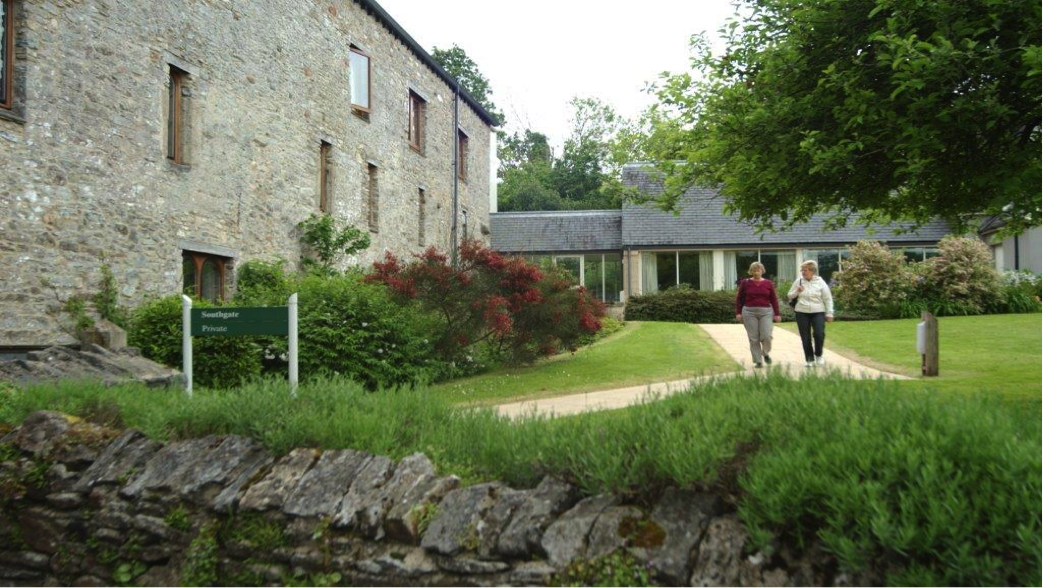
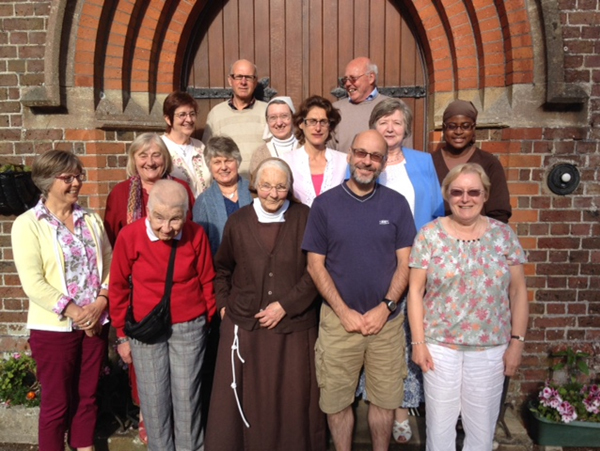
Two people walking in a garden

For further information about these programmes please e-mail – infocouk@btinternet.com

Introductory Days.

Introductory Weekends.

Various Weekends on subjects covered in Spiritual Journey.
A basic Five-day Centering Prayer Retreat.
Five Day and Ten-Day Intensive Retreats.
Post Intensive Retreat.
Lectio Divina Weekend.
Quiet Days.
External Study Programme.
Developing the Christian Contemplative Tradition.

  1. St. John of the Cross Day.
  2. The Cloud of Unknowing.

Facilitator Formation.
Formation for Contemplative Service.

For the first 12 centuries, contemplation was the normal development of a mature sincere life of prayer.

In the 12th Century, there was an urge to bring more order and method in to prayer. The rising advent of schools of theology meant that scripture was removed from vocal prayer. For various historical reasons prayer began to be compartmentalised.

By the 16th century discursive meditation (thinking about the text), affective prayer (talking to God) and contemplation (being caught up in God) were separate units, distinct ways of praying rather than a series of movements led by the Spirit which could occur in a single period of prayer. Contemplation was regarded as an extraordinary grace, reserved for the few and all but forgotten.

In the 20th Century, a revival began largely due to such people like Thomas Merton. Today we have people like Thomas Keating, Cynthia Bourgeault, Richard Rohr and many more continuing to explore the tradition to facilitate the gift of contemplation.

The Process of Forming a Centering Prayer Group

In the last newsletter, I outlined the process of setting up an introductory day. There was an emphasis throughout on the setting up of a support group post the introductory day. I will now talk about the process of setting up such a group. I have increasingly realised how being part of a support group is essential in our spiritual transformation. This is something emphasized in all spiritual teachings.

After the introductory day, I had a list of emails of people who attended, as well as those interested who could not attend. I emailed these people asking them for their preferences, where the group should meet, how often it should meet, when it should meet and how the group should run. Obviously it is impossible to meet everybody’s needs.

What emerged though were three groups meeting fortnightly. Fortnightly suited me as three groups a week would have been too much for me. Monthly and there is a tendency to lose continuity, especially if someone misses a meeting. One was in Nottingham, and two in a suburb of Nottingham where I live, where the introductory day was held, and where many people lived. Two were in the afternoon, one in the evening. The evening one clearly suited those still working, whereas retired people tend to have a preference for daytime meetings, and the majority of those attending were older. My commitment was to stay with the groups for as long as they wanted to continue meeting. They are still all running.

The next question was the length of each session. I know of groups where they meet for centering prayer, then depart; over in half-an-hour. Other groups have a reading or two, some sharing, and last less than an hour. My and the group’s preference was for a meeting of 90 minutes. We start with a period of CP. We then have cd/dvd in-put, though one group now prefers this in written form. We then have a time for discussion, sharing and questions. Normally there is far too much that people want to say and share for the time available. The most common response is that they have never had the chance to explore such matters anywhere else. It is not a therapeutic group, though inevitably people will share things from their own lives.

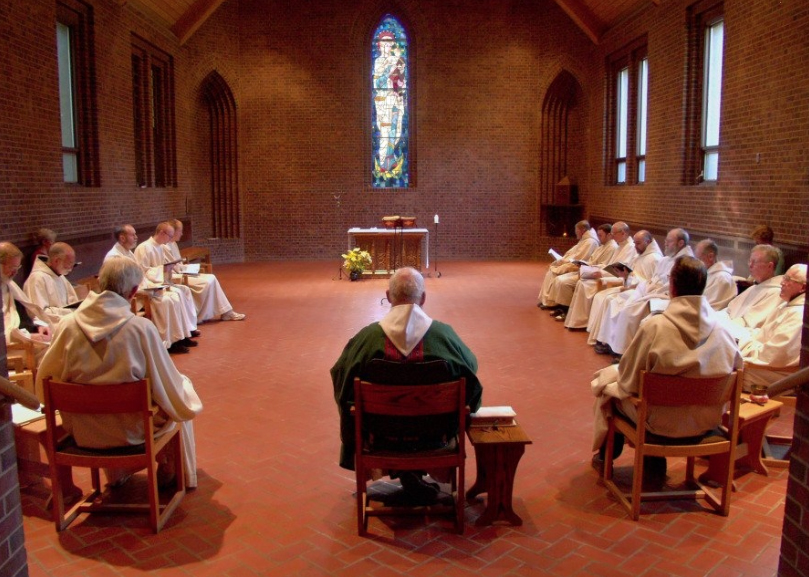
Monks at prayers

I hope I am conveying the sense that there are no rights and wrongs for groups. Each group will be different. Its needs will be different. The members of it come from different backgrounds and they will be at different stages of their spiritual journey. But that is what contributes to making the groups so exciting and vibrant. The people in the groups I run come from different denominations as well as those not affiliated to any church. This could be seen as problematic, but the emphasis is on respect and sharing personal spiritual experiences, not particular beliefs.

I was aware of the danger of following CP with discussion. Inevitably this process moves people out of their hearts and into their minds or ego’s. However, as long as everyone remembers that ultimately, we never can express that Divine Mystery in words or thoughts, there is no problem. Whilst a deepening understanding of what is happening and the processes involved can be very beneficial in the process of transformation.

In terms of the material used, this is a vast subject. We started with the follow up material from Thomas Keating. These can be borrowed from COUK, or can be downloaded online in audio form at a reasonable cost. The material used will depend on the group and the people in it. My groups have wanted more than just Thomas Keating. This has led us to use Laurence Freeman, John Main, Richard Rohr, Cynthia Bourgeault, Eckhart Tolle and others, as well as continuing with Thomas Keating. They all give slightly different perspectives on the same issues, which has been found to be very helpful. Some people find one person more helpful, some another person.

Ten Day Intensive Retreat

I can truly say that being part of these groups has been an amazing privilege, one that has greatly helped to transform my spiritual life. I cannot rate them too highly. I would also encourage everybody to try and set up a group. You don’t have to be an expert. You don’t have to be super spiritual. You don’t have to know more than everyone else. Just your gift of setting up the space and time is enough.

I have barely touched on all the issues to do with groups here. I am though more than happy to communicate in greater depth with anyone interested.

Richard Eddleston 22-02-2018

Setting up an Introductory Day on Centering Prayer

Having read of the importance of being part of a Centering Prayer group, I looked for one near me in Nottingham. There was none, I decided the way forward was to start one myself. .I contacted Elizabeth Smith, director of Centering Prayer UK (COUK) and sorted out possible dates with her for an Introductory Day to Centering Prayer.

I sorted out a venue local to where I live in a suburb of Nottingham. I needed a room that could take about 50 people. I had no idea how many might come along. It also needed to have access to tea/coffee making facilities. Parking would be good and easy access for anyone disabled. I came up with a room in a local Church, which I had used before. It was also not too expensive. It certainly required a sense that this was what God was wanting me to do.

We agreed on a Saturday. This was some months in advance as I wanted plenty of time to plan and prepare. I decided that it was best for people to bring their own lunches. It is a nice idea providing lunch, but it creates an awful lot more work and puts up the cost. I worked out a cost based on 20 people attending, the costs for Elizabeth coming, and the cost of hiring the room for the day. The introductory course is normally 10.00/10.30 am – 3.30/4.00 pm.

Then there was the advertising to sort out. I devised a poster and sent it round lots of churches, asking if they could put it in the church notices. Having personal contacts is always a great blessing. In fact, the majority of people who eventually came already knew me in one way or another.

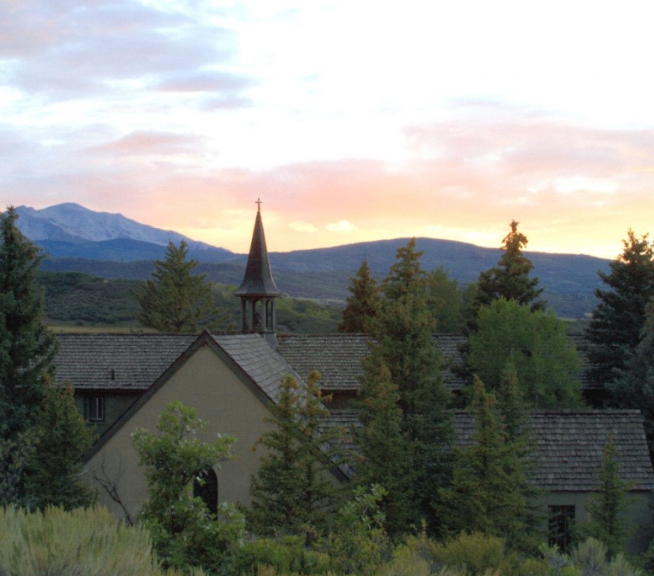
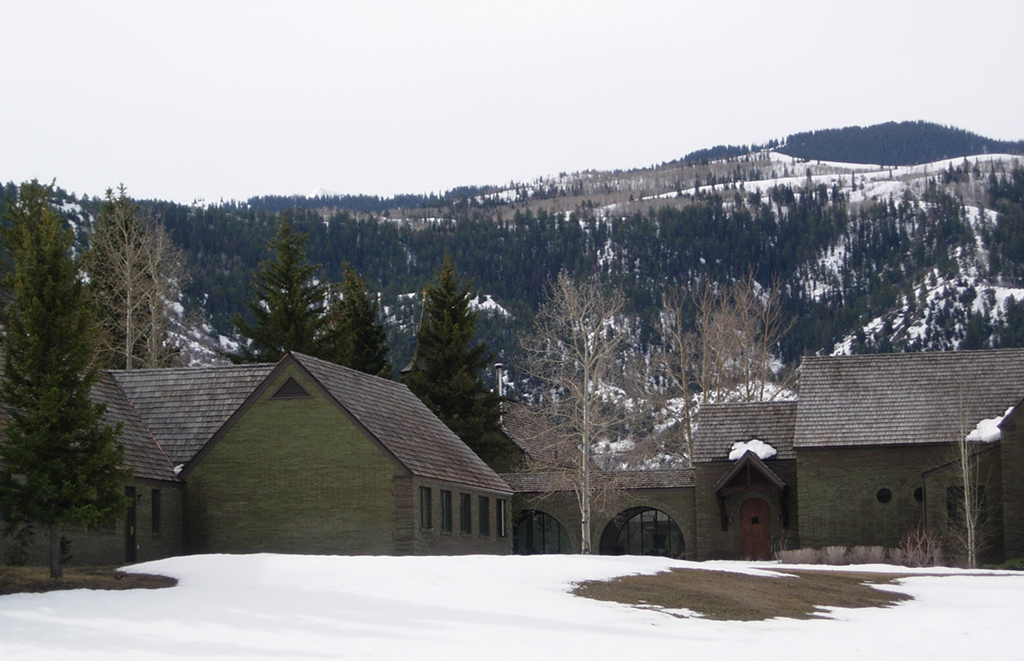
Snowmass Meditation Hall

I got an article about it in the local newspaper. Local newspapers are normally keen to get local news items. I put posters up in local shops and the post office. Some you have to pay for. Supermarkets normally have a community board and will put it up for free.

I probably circulated the local churches with six weeks to go, then again with three weeks to go. All this is very cheap and easy when you do it on the internet. The more places people might see a poster, the better. There is a rule about people needing to see something three times before they act.

I devised a simple form for people to fill in when they contacted me. From that, I created an email list of people wanting to attend. It was important all along, from the poster onwards, to create the idea that there would be follow-up sessions for those interested. The email list is key in this. With an email list, I could send out reminders to participants closer to the day.

I got a couple of those participating to help out with the teas and coffees. This left me free to welcome participants on the day and to settle them in. Also, to sort out any needs that Elizabeth might have, though we had agreed in advance what she might need. The day went very smoothly and was not really a great deal of work at all. Thirty people came, which was ideal.

They were a mixed bunch. They came from a variety of denominational backgrounds, plus those who had no affiliation with any church group. The moral of this is to work hard on people you know and ask people to spread the word. Go along to any church where you have contacts and talk to them about Centering Prayer and what the course involves.

Seeing you in person begins to break down any barriers and misconceptions about what Centering Prayer may involve. I will look at the process of setting up groups following on from an introductory day, and how these might function in my next article.
By Richard Eddleston 6-7-17 riedd@btinternet.com

Our Address